
EXTRA PARTS
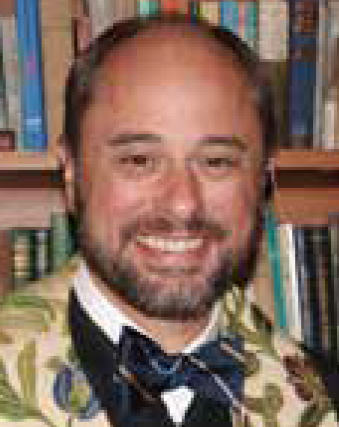
Nathan Attwood, Pastor, Marianna First United Methodist Church
"The eye cannot say to the hand, 'I have no need of you,' nor again, the head to the feet, 'I have no need of you.'" 1 Corinthians 12:21
Perhaps you have recently been tasked with assembling something. My children are big enough that I don't have to assemble Christmas presents as much as I once did. My grandchildren, however, have many Christmas gifts that require assembly. My son-in-law is a whiz with that stuff, so mostly I provide encouragement and not assistance. But for many years, Christmas involved late nights of putting the parts together while deciphering complex instructions clearly originally written in another language and badly translated into English.
The most discouraging moment in assembling toys, furniture, gas grills, or anything else that comes in a box with many steps full of obscure directions is the moment the thing seems complete, and yet, there are EXTRA PARTS.
What do we make of the extra parts? Did the manufacturer include multiples of parts so that the extras would be available just in case? Or can the thing we just assembled function without the extra parts? Or have we made a grave and unrealized error and excluded necessary parts whose absence will doom the object to eventual failure? Extra parts drive me nuts. They make me go over the whole thing again, generally never figuring out my mistake.
In 1 Corinthians, Paul teaches a contentious church that they collectively form a whole, that each one of them has an important part to play in the overall life of the community. He uses a body metaphor. He compares the church as a whole to a complete body, and tells us that the individual members are like the members of a body. They are different, yes, and their difference is exactly what makes each one of them crucial to the overall functioning of the whole. A hand is not a foot, an eye is not a tongue, a knee is not a spleen. A body full of eyes could do nothing but see. A body with no brain would be unable to do anything with the physical capacities of all the other parts. A body with a stomach missing would be unable to nourish all the other parts. With the possible exception of an appendix and wisdom teeth, the human body has no extra parts. We need them all.
Years ago, I was an associate pastor at a large membership church with lots of people and tons of ministries. It was a complex organization that required quite a bit of coordination and consistency to run efficiently. That church had a particularly active lay person who ran several important ministries. She was also, shall we say, quirky. She had her own way of doing things. She had her own people she tended to include. She had a bit of a sense of ownership over the areas of ministry she led. Another associate pastor at that church used to get aggravated about these quirks and complain about her ways. A wise lay leader would often tell him, "We need her."
We all have quirks. I know I do. As a pastor, I run up against people's quirks all the time. I suppose if I deal with anyone in the church long enough I find out the ways they can be a problem when pressed or pushed. I'm sure the people in my church have figured out how I, too, can be a problem, the ways they need to offer me grace and work around my foibles. I hope they feel like it's worth it to offer me grace because, like my quirky friend at my old church, they need me. I know I feel that way about the quirks of the people who make the ministry at our church happen. I need them. We all need everyone. If any of us steps back or steps away, we are all diminished.
Maybe you are reading this and you aren't a church-goer. Or perhaps you are a casual enough church-goer that you might struggle to relate to what I'm expressing. My real point is not about church life. I believe Paul's real point to the church at Corinth is also not about how to value quirky volunteers so that the doors get unlocked and the choir cantata gets performed and the fellowship supper gets cooked. No. Paul's point is a bigger one about life, relationships, and the need we share for everyone to be included for the benefit of all.
Church is a sort of practice community for living in community in the world. In every office, in every workplace, in every family, in every town, in every group of friends, in every school, we face a temptation to think there are some people who add to our shared life who we value and others who take away from our shared life who we must manage or exclude. We tend to think that the people who conform to the group's identity and those who bring capacities we treasure should be most valued. We tend to push aside the quirky, the different, those with a different point of view, those with different interests or abilities.
Those very people, the quirky ones, are the people who give us what we need the most. They are the ones who balance us out, who offer gifts and graces, abilities and perspectives we lack because of our tendency toward sameness. A football team made up of all wide receivers would be unable to block. One made of all lineman would never get open for a pass. A team needs diversity. And, in all our life together, whether we realize it or not, we are a team. It's what's different about you that I need, not what's the same. If all you know is what I already know, if all you can do is what I can already do, if all you think is what I think, what do I need you for?
But, Paul says, we do need each other. In God's church, there are no extra parts. In God's world, there are no extra parts. Each one has a precious role to play, each has a unique gift to give, each is a unique treasure offered to the others. Quirky as we may all be, we need each other. God made it that way. And so, let's be a bit more patient with each other and our quirks, not just because we are tolerant people. Let's learn to put up with each other's quirks because we are deeply convinced that each and every person is vital to all our thriving, that if I push anyone aside I will cut myself off from a gift I cannot do without.