
DON FUQUA: HIS JOURNEY FROM ALTHA, FLORIDA, TO THE UNITED STATE CONGRESS AND HIS LEGACY OF LEADERSHIP IN SCIENCE, TECHNOLOGY, AND EDUCATION
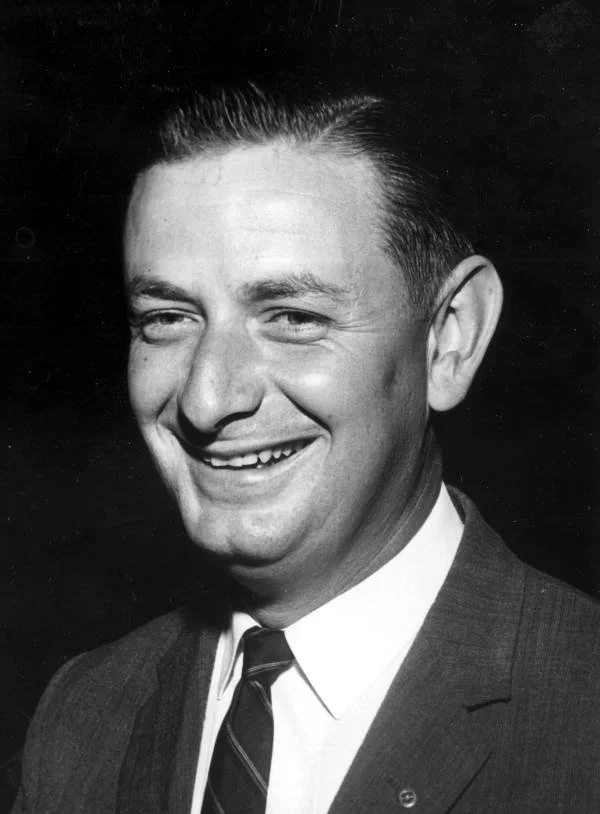
DON FUQUA
In 1933 Don Fuqua was born in Jacksonville, Florida. His father John managed an A & P Tea grocery store. After his brother Harry was born in 1936, Mr. Fuqua decided that a large city was not the ideal place to raise three boys, so with an improving American economy, the Fuqua family moved to Altha, Florida, in 1938, a small community in Calhoun County. At the Fuqua farm, Don and his brothers helped operate dairy cattle, and grow and harvest soybeans, cotton, and peanuts.
The farm chores were an important foundation for a successful work ethic. At the time, the population of Altha was about 500 people.
The future Congressman played football and other sports at Altha High School. He also became involved in the “Future Farmers of America,” where he learned valuable lessons of collaborating with other young people from all over the state of Florida on agricultural issues.
One day those lessons would serve him well.
Congressman Fuqua played a critical role in legislation and funding for America’s successful space exploration and technology supremacy. In Tallahassee, North Florida, and the entire country, his legacy in science and technology, health care, and education, includes creating the FAMU-FSU Engineering School, assisting in the vision to bring the National High Magnetic Field Laboratory to Florida, building the Veterans’ Administration Hospital in Lake City, and improvements to the Veterans’ hospital in Gainesville. Just as importantly, Congressman Fuqua’s legacy includes the thousands of citizens he helped in so many ways with his dedication to public service. All these accomplishments are a testament to his devotion to public service, his district, and his country.
“I owe much of my future success to the Future Farmers of America, where I was fortunate to serve as President of the FFA. Gene Ryals our agriculture teacher in high school, encouraged me. He had served in World War II, and was from Webster, Florida. Another inspiring mentor was my minister at the Baptist Church in Altha. He helped me write my speeches when I campaigned to be president of the FFA. He told me I had good public speaking gifts, and that I should pursue them in the FFA. The Future Farmers of American in the early 1950’s was, and still is, a vibrant group of young people dedicated to learning more about agriculture and other relevant topics of science, politics, current events, and many other subjects.”
Many leading Florida political figures participated in the Future Farmers of American. Future Florida Agricultural Commissioner Doyle Conner was president of both the state and national organization. Senate President and long-time State Senator from Quincy, Pat Thomas, was a Vice-President of the FFA.
Part of campaigning for FFA President meant often speaking at banquets on these topics. “This certainly improved my public speaking, which I enjoyed.” Mr. Fuqua developed a keen interest in Parliamentary Procedure. “This served me well for my entire career. At every meeting, you must have order, or you cannot accomplish anything. Whether you are serving as Chairman of a Congressional Committee or conducting a corporate gathering, it is imperative that everyone know and respect parliamentary procedure.”
In 1958, the voters of Calhoun County elected Don as their State Representative. By 1962, Don Fuqua defeated Dexter Douglass, a skilled and successful Tallahassee lawyer, and Hal Davis, a popular lawyer from Quincy, Florida, to become a member of the United States Congress as the youngest elected Democratic member to Congress.
During his tenure in the Congress, Don Fuqua would rise to the heights of serving as Chairman of the innovative and powerful Congressional “Science and Technology” Committee, during the formative years of space exploration and the development of computer and magnetic technology.
The 1962 Congressional Election
1962 was a very eventful year for Florida and the country.
The 1960 Census added four critical Congressional seats to Florida. Don Fuqua was elected to the newly created ninth congressional district, Claude Pepper was also elected to the Congress, from Miami, along with, Sam Gibbons from Tampa, and Edward Gurney from Orlando. All four United States Representatives would serve Florida well in the next crucial decades.
In 1962, Don Fuqua had not planned to campaign for Congress. His goal was to be elected Speaker of the Florida House of Representatives. But due to an appellate court appointment in 1961, Fuqua’s political calculus would change. And at age 29, Don Fuqua would not only campaign for Congress, but he would also be the youngest Democrat elected in 1962, and the second-youngest Member elected in the entire 435-membership of the United States House of Representatives.
That year, the United States Supreme Court decided Baker v. Carr, 369 U.S. 186 (1962), where it ordered state legislatures to include only “one man, one vote” districts, eventually ending the rule of the “Pork Chop Gang”, leaders of small rural counties in the Florida legislature. The “gang” referred to the power of the men who represented rural counties based on the legislative apportionment and assignment of representatives and state senators. While small counties like Calhoun were guaranteed at least one state representative, much-more populated counties like Dade, Duval, and Hillsborough would have no more than three state representatives. Thus, in the days before the Baker decision, counties with small populations have much more power in a legislative system that was not based on the principle of “one man, one vote.”
Ironically, of course, the United States Senate remains based on a model that provides much more power to states with small populations, but that is provided in the Constitution itself. This issue was troublesome for the Founding Fathers and only resolved by the creation of the United States Senate.
For the states, after the Supreme Court decision in Baker, no longer would every county in the state have at least one sole representative to protect its interests, including Calhoun County, represented by Don Fuqua. But the rural political leaders in Tallahassee remained in power for redistricting after the Court’s decision, and they insisted that one of the four new congressional districts from the state’s population growth would include rural north-Florida counties.
After two consequential terms in the Florida House of Representatives, from 1958-1962, Don was well positioned to campaign for Speaker of the Florida House of Representatives. Though his foundational participation in the Florida chapter of the Future Farmers of America as President, where Don Fuqua had honed his speaking talents, his many political friends and acquaintances from his studies in Agricultural Economics at the University of Florida, including future Florida House Speaker and Senate President Mallory Horne (the last person to lead both state chambers), future Agriculture Commissioner Doyle Conner, and many others, his service in the United States Army,
Don Fuqua had a legitimate opportunity to serve as the highest ranking elected state representative in Florida. The Speaker of the House controls all considerations of proposed House legislation, all House positions on state appropriations, oversight of all Executive-Branch agencies, and state universities, at that time including the University of Florida, Florida State University, and an extensive network of community colleges.
But life sometimes opens doors of opportunity that one never expects to beckon.
In 1956, the people of Florida responded to a reform effort of the Florida Bar Association and many others to create an intermediate court of appeals to relieve the overwhelming caseloads and delays in the Florida Supreme Court. Although opposed by some justices of that Court, Justice Elwyn Thomas led this effort. The state electorate approved a state constitutional amendment creating the district courts. In 1957, the legislature enacted the implementing law and three district courts were created. (This author served on the First District Court of Appeal from 2005-2025).
The First District Court of Appeal consisted of all North Florida, including Gainesville and Ocala. Each district court was assigned three judges.
In 1961, the Governor of Florida had to choose a new judge on the First District Court of Appeal. John Rawls was a powerful state senator and a successful attorney. In the Florida Senate he represented Jackson County, in the newly created congressional district serving Tallahassee and the surrounding rural counties. All political observers fully expected Rawls to run for the newly redrawn congressional district.
But Governor Bryant tapped John Rawls to serve on the First District, where he served until 1977.
Friends and political allies of Don Fuqua posed a question to him: why not seek election to the new congressional district rather than aspire to become House Speaker?
Initially, State Representee Fuqua rejected the idea. After all, he came from the smallest of small towns, did not represent the population center of the congressional district, he had an unusual name, and he had not considered the possibility. Fuqua knew that he would face two formidable opponents in the election, successful lawyer Dexter Douglass of Tallahassee, and Don’s friend and college roommate from Quincy, Hal Davis. Don attempted to persuade his friend Hal from entering the race, to no avail.
Slowly, Don Fuqua changed his mind and decided to seek election to the United States Congress, after consulting with his allies, friends, and family. After all, the same background that made Fuqua a credible candidate for Speaker of the Florida House would serve him well in the congressional election. And unlike the state House-Speaker position, which was an “up and out” proposition, Don Fuqua could serve in the Congress for many years. And thus, building on a relentless work ethic forged on his father’s dairy farm in Altha, where he worked the farm with his two brothers, his time in the Army, his diligent business endeavors, Don Fuqua would campaign as a candidate for the United States Congress.
Eventually six men would campaign for the congressional seat in the Democratic primary. And the winner of that primary would not have serious opposition from a Republican at that time. The primary winner was all but guaranteed to enter congressional service.
Davis and Douglass would campaign as staunch conservatives on the issues of the day in 1962. Don Fuqua would campaign as a pragmatic moderate. Like other southern states then, political issues of civil rights were certainly paramount in the minds of many voters.
The Fuqua campaign did not exactly start smoothly. In a perhaps auspicious sign, the campaign ensured that Don Fuqua would file the very first papers to qualify for the election, as the Secretary of State. The long-serving and locally famous Dorothy Glisson accepted the Fuqua papers.
But another event managed to upstage the earliest filer for the Ninth Congressional District.
On February 20, 1962, astronaut John Glenn flew the first orbit around the earth. The Fuqua filing was “slightly” pushed back on the pages of the Tallahassee Democrat and other papers. Yet, it was a harbinger of things to come, as the future Congressman would help guide America’s space program to the moon, the Space Shuttle program, and other space flights for the next twenty-four years, just under a quarter century.
When questioned how he won the election and defeated defeated a well-connected and successful Tallahassee lawyer, Fuqua discussed meeting garbage workers at 5:30 as they first showed up for work. Don Fuqua worked endlessly all day and into the night. He went to where the people were, not just to where the leaders congregated.
In those early years of the 1960’s in north Florida, long before television and large money donations dominated congressional elections, not to mention the Internet or social media, old-fashioned campaigns consisted of loud speakers on cars, motorcades, catchy radio jingles, and most importantly, person-to-person communication-in barber shops, small businesses, local-rural newspaper editor meetings, bar-b-ques, fish-fry events, Rotary clubs, and similar grassroots meetings.
“I always wanted to help people. I wanted to solve problems. I wanted to change substantive policies in Washington that would improve Americans’ lives,” Don Fuqua said. “I liked listening to people and hearing their concerns.” As a rural county state representative that held “constituent meetings” on his front porch of his father’s farm, Don Fuqua could listen sincerely and follow up on what he heard from constituents.
It was a humane talent that would serve us well for the next quarter century.
In 1962, campaigning in the largest congressional district east of the Mississippi River, a candidate had to travel to every small town and community in an area like the size of a small state. Don Fuqua campaigned in Madison, Greenville, home of the famous Ray Charles, Perry, Live Oak, Crawfordville, Apalachicola, Blountstown, Lee, and many, many stops.
“You shook a lot of hands. You worked dawn to dusk. You visited every place your allies told you to go. You ignored no one, from the wealthiest and most powerful to the humblest workers.”
An ally helped Don create a snappy radio ad: “Go all the way with Fuqua; and he’ll go all the way with you!” When Don heard children singing at a bus stop, he was delighted. The ad ran repeatedly on WTAL, Tallahassee signature AM radio station and was very effective in making the “unusual name” a household name.
The Vickers’ family befriended Don. Dr. Paul Vickers was an admired veterinarian, and his father-in-law was the long-time police chief of Tallahassee and Leon County Sheriff Frank Stoutamire. Don often stayed in the Vickers’ home while campaigning in Tallahassee.
When the first primary election eliminated Douglass and three other candidates, Don Fuqua and Hal Davis contested for the final prize. Davis continued his conservative themes. But “when Hal relied on his ‘American’ roots, the important Greek community in Tallahassee did not like that. They all voted for me,’ Don noted.
Eventually, the debate between the two front-runners and former friends became personal. When Don perceived that Hal Davis had “stepped over the line” in a radio event, Don Fuqua replied, “Hal, you’ve been a friend at my mother’s home for dinner. I am surprised you would make a comment like that.”
The election was over.
Don Fuqua, not yet thirty-years old, became the first congressman elected to Florida’s newly created Ninth Congressional District, later the current designated Second Congressional District of Florida. Congressman Fuqua would serve tirelessly, along with his late wife Nancy, in traversing the roads, towns, villages, and coast of the largest district in the East.
During his 24-year congressional career, serving twelve consecutive terms from 1963 until 1987, never defeated during that tenure, Don Fuqua served all of North Florida and America with great distinction and dedication. Congressman Fuqua held hearings to discuss the country’s need for more engineers from diverse backgrounds; he led the way in creating the new Florida Agricultural and Mechanical/Florida State University School of Engineering. Even after Don Fuqua voluntarily retired from public service, he donated $200,000 ($584,500 in 2025 dollars) of his remaining campaign funds to the new joint engineering college. His contributions established the Don Fuqua Eminent Scholar’s Chair at the new Engineering School, the first at the new school.
Congressman Fuqua’s national leadership in technology and his local accomplishments are recognized today at the Don Fuqua Research Complex in Tallahassee at Innovation Park along with the “Mag Lab” and other leading-edge research activity.
Congressman Fuqua also contributed his congressional service and post-electoral efforts to many leadership positions at the University of Florida, including that prestigious University’s Alumni Association and its critical fundraising entity, the University of Florida Foundation.
Altha, Tallahassee, Gainesville, Greenville, Madison, Lake City, Perry, Quincy, Blountstown, the Veterans’ Administration hospitals and clinics, Apalachicola, the Don Fuqua Research Complex, Florida State University, the University of Florida, the Florida Agricultural and Mechanical University, Florida State Colleges in Tallahassee and Gainesville, and thousands of North Floridians, and other Americans helped by Congressman Fuqua are his legacy of leadership.
Thank you, Congressman Fuqua, for your service to Tallahassee, North Florida, and the American people.
Judge Bradford Thomas (retired) served on the First District Court of Appeal from 2005-2025, including serving as Chief Judge from 2017-2019. His later mother-in-law Nancy was married to Don Fuqua until her death in 2000. Judge Thomas previously served as a senior advisor to Governor Jeb Bush, the Speaker of the Florida House of Representatives and President of the Florida Senate, an Assistant Felony State Attorney, and an Assistant General Counsel for the Florida Parole Commission and the Department of Environmental Protection He is a Florida State University and University of Florida graduate.
A shorter column on Don Fuqua’s “Legacy of Leadership” appeared in the Tallahassee Democrat on December 21st, 2025.