
A Successful 2026 Beef and Forage Field Day Concludes
By: Shelia Mader
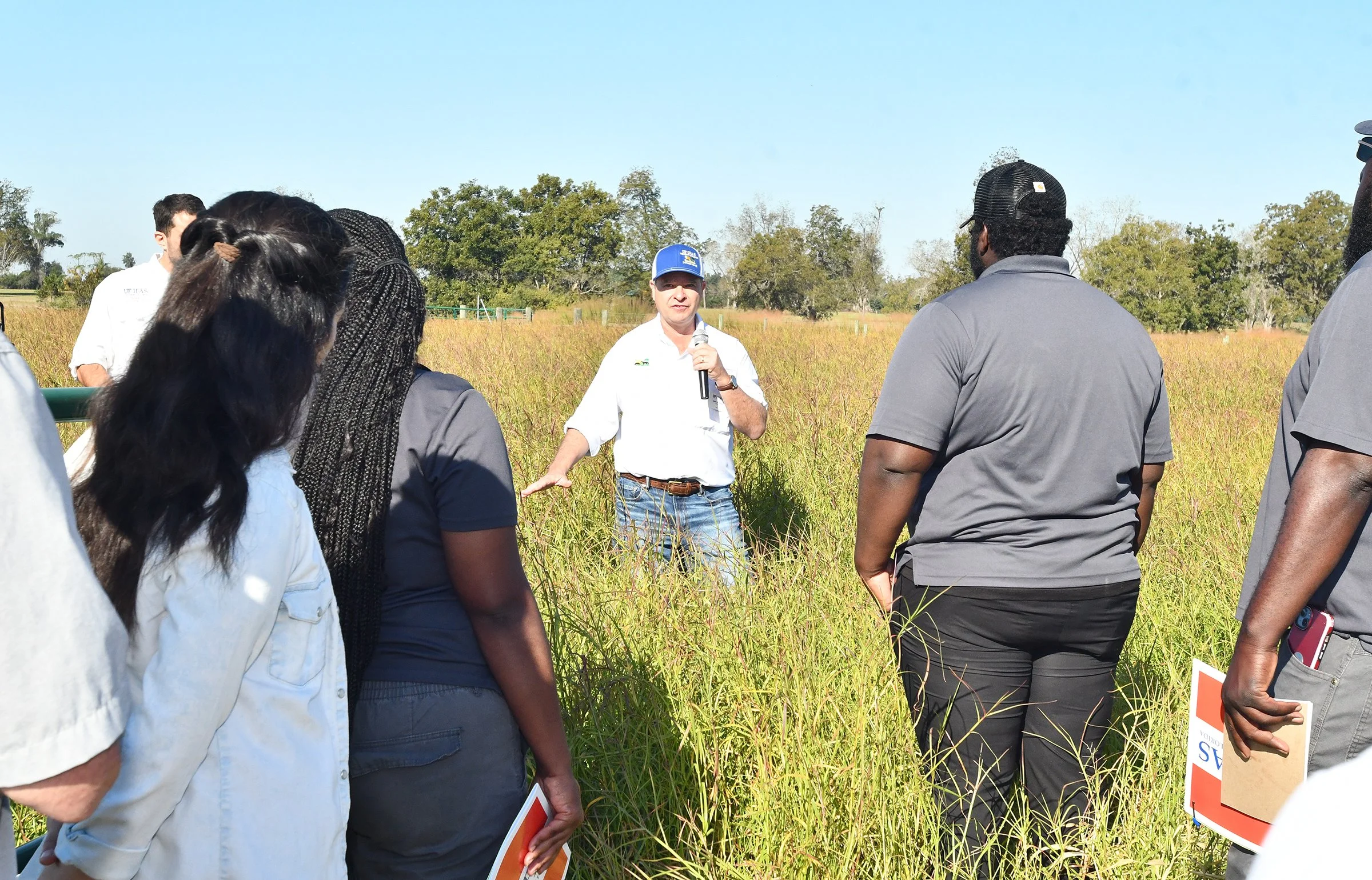
Tuesday morning, the North Florida Research and Education Center welcomed producers, landowners, agricultural professionals, and students to its 2026 Beef and Forage Field Day just outside Marianna. Held every 18 months, the event is designed to bring the agricultural community together for a full day of practical learning, hands-on demonstrations, and expert insight aimed at improving beef cattle and forage management.
This year’s program featured a lineup of knowledgeable speakers, including Jose Dubeux, Jennifer Bearden, Dr. Angela Gonella, Kalyn Waters, Cheryl Mackowiak, Doug Mayo, Mark Mauldin, Benjamin Hoffner, Nicolas DiLorenzo, and Nick Simmons. By sharing both research findings and real-world experiences from cattle producers, presenters continue to build a deeper, more current understanding of an industry that is constantly evolving.
“The beef and forage field day started when the unit opened in 2001, and we’ve held it every 18 months since,” said Jackson County Extension Director Doug Mayo. “We showcase the research happening here, but we also focus on issues that are especially important to cattle management this time of year.”
Attendees rotated through four interactive stations during the morning, each highlighting a different aspect of the industry. Topics included feeding strategies, breeding practices, and integrating cattle into crop systems.
“It’s a whole different experience when people can see firsthand what we’re doing,” said Nicolas DiLorenzo, professor at UF/IFAS NFREC. “That connection to real, in-the-field work is incredibly important.”
Extension officials emphasized that collaboration between researchers and producers is key to meaningful progress.
“One thing we figured out many years ago is that the university can have great science and valuable knowledge,” Mayo said. “But if cattle producers don’t use that information, then it doesn’t serve its purpose.”
Field days like this also help guide future research efforts. By hearing directly from those working in the industry, researchers can better identify challenges and focus their work where it matters most.
“One of the strengths of this station is that it’s located in an area with a strong presence of both cattle and crops,” DiLorenzo said. “We rely on producers to share what they’re seeing, and that helps us design research that addresses those real-world challenges.”
As has become tradition, the day wrapped up with a steak lunch, giving attendees one more opportunity to connect, reflect, and enjoy the fruits of the industry they help sustain.
