
County Approves Ambulance Rate Adjustment Following Medicare Update
By: Shelia Mader
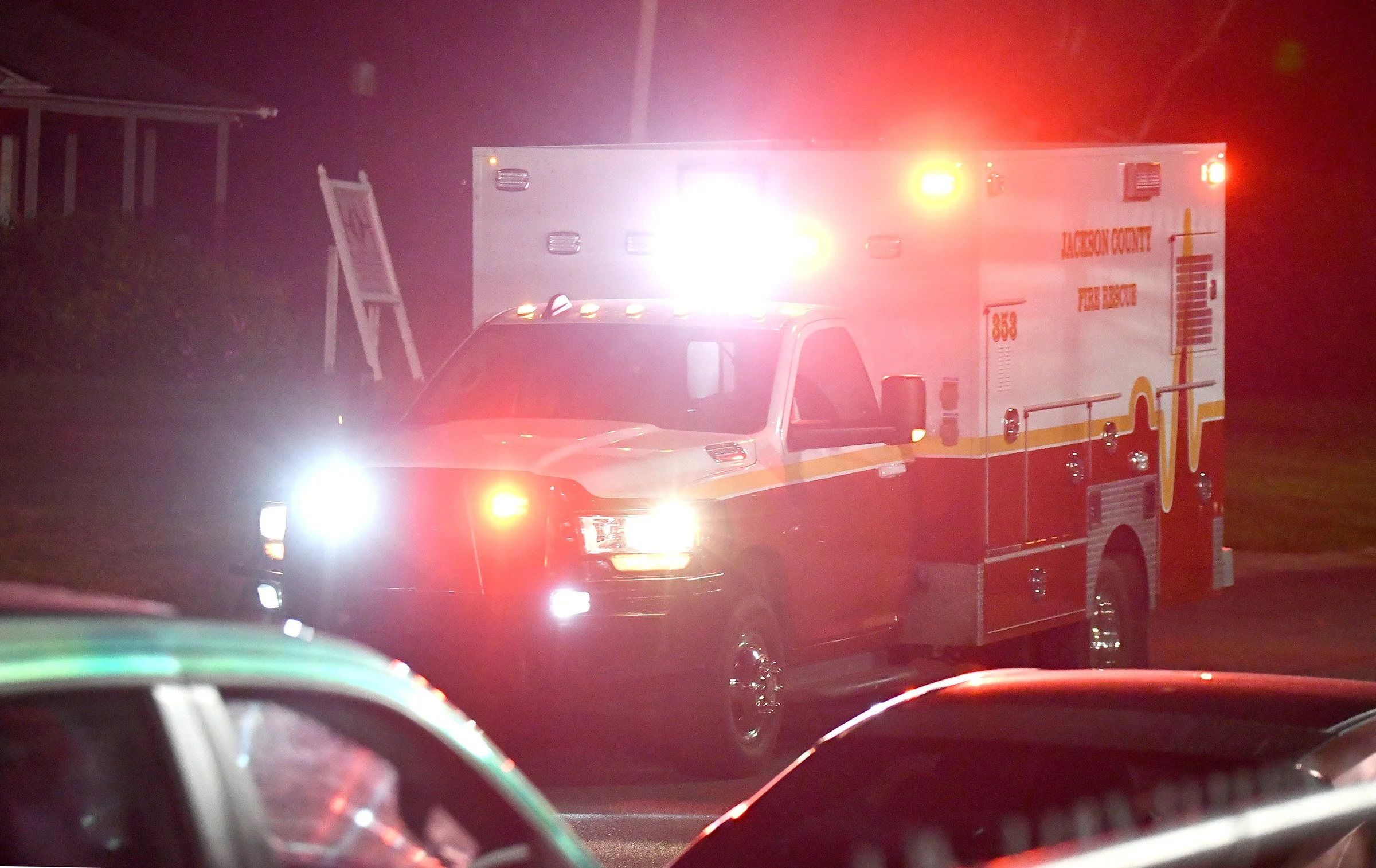
The Jackson County Board of County Commissioners voted 3-2 to approve an increase in ambulance transport rates, following a recommendation from the county’s billing and collections consulting firm. Commissioners Ed Crutchfield, Paul Donofro, and Chairman Jamey Westbrook voted in favor with Commissioners Donnie Branch and Dr. Willie Spires voting against.
County Administrator Jim Dean explained that each January Medicare releases updated allowable rates. After reviewing the new figures, the county’s consultant recommended adjusting local ambulance rates to reflect rising operational costs.
Because Jackson County is classified as rural, and in some areas super-rural, Medicare allows higher reimbursement rates to account for longer transport distances and related expenses. The board approved a rate set at 300 percent of the Medicare allowable rate. While federal guidelines would allow billing up to 350 percent, the consulting firm advised that 300 percent represents the most effective balance between reimbursement and minimizing insurance write-offs.
Jackson County Fire Rescue Chief Charlie Brunner told commissioners the county currently collects between 70 and 72 percent of billed ambulance charges. The national average for county EMS services is about 60 percent.
He added that more than 65 percent of transported patients have some form of health insurance coverage, whether Medicare, supplemental Medicare plans, commercial insurance, VA benefits, or Tricare.
Chairman Jamey Westbrook praised Brunner’s grasp of the complex billing structure, stating, “I want to commend Chief Brunner for being pretty darn knowledgeable about that right there.”
Brunner responded that understanding the system has come with years of experience and working with the right people to answer his questions.
Commissioners questioned how the adjustment would affect residents, particularly those on Medicare or with commercial insurance.
Dean and Brunner emphasized that Medicare patients with supplemental insurance typically would not see higher out-of-pocket costs as a result of the rate adjustment. Commercial insurers in rural and super-rural areas commonly reimburse up to 300 percent of the Medicare allowable rate. The approved increase aligns with what insurers already recognize and reimburse in this region.
For patients with commercial insurance only, Brunner explained that most typically pay between 10 and 20 percent of the total bill, depending on their plan, deductible status, and whether they have met their annual deductible.
Florida Medicaid patients cannot be balance billed under state law. In those cases, the county must accept the Medicaid payment and write off any remaining balance.
Dean noted that for uninsured patients, the county often absorbs the cost. “It’s a service that we provide ultimately,” he said, describing ambulance transport as a core 911 function in a rural community.
The county accepts a minimum payment of $25 per month from patients. Accounts with no response after four billing cycles are turned over to a collection agency.
Commissioners also discussed increasing EMS demand. Brunner reported that Jackson County answered 11,575 calls for service in 2025, up from 11,071 the previous year. The county has seen an average increase of roughly 500 calls annually.
Commissioner Ed Crutchfield referenced incidents over the past weekend when residents questioned why an ambulance responded from a neighboring county while one was stationed in Graceville. Concerned, Crutchfield contacted Chief Brunner directly to understand the situation.
Brunner explained that Monday through Wednesday of the previous week they saw unusually high daytime call volume. During that stretch, Jackson County had to rely on mutual aid agreements with Washington and Holmes counties to cover calls along the Graceville and State Road 77 corridor.
Under existing automatic aid agreements, the closest available ambulance is dispatched when local units are already committed. In some instances, two calls were active at the same time, requiring support from neighboring counties.
Crutchfield acknowledged the strain and noted that if call volume continues to rise, the county may eventually have to consider placing another ambulance into service, particularly given growth in apartment complexes and other residential areas.
“If we don’t give the service to the people, it costs money to do it,” he said, emphasizing that maintaining coverage is essential.
Brunner told the board that ambulance transport services generated an estimated $3.67 million in revenue last year. Based on current call volume and the proposed rate adjustment, the county estimates an additional $736,000 in revenue.
Even with the increase, commissioners noted that collections still do not fully cover 100 percent of fire rescue operational costs.
Commissioner Paul Donofro made the motion to adopt the new ambulance fee schedule as recommended by the consulting firm and to authorize the chairman to sign the necessary documents. Commissioner Crutchfield seconded the motion.
