
County presents first balanced budget in years, braces for future revenue losses
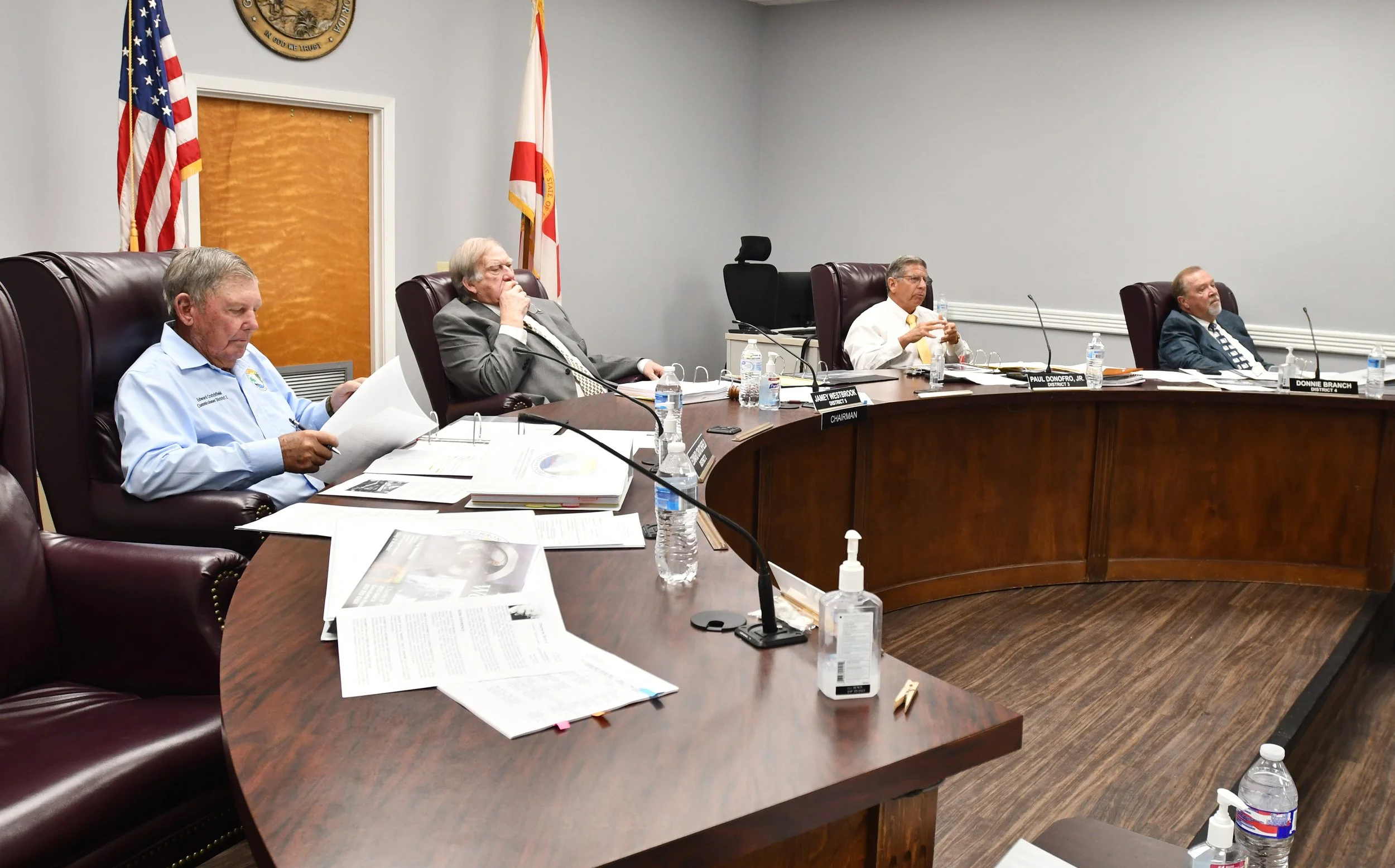
For the first time in several years, Jackson County is heading into a new fiscal year with a proposed budget that balances recurring expenses with recurring revenue, without borrowing from the previous year or relying on one-time fixes to fund daily operations.
County Administrator Jim Dean presented the proposed 2026-2027 budget during a county commission workshop, repeatedly emphasizing that the $108.5 million spending plan is structurally balanced. Excluding grants, the county's operating budget is projected at $81.8 million, down from $87.8 million in the current fiscal year.
"With the hard work of our staff and also of Mr. Rooks' office, we have a balanced budget," Dean told commissioners. "We do not have to rely on one-time, short-term fixes."
The proposal keeps the county's millage rate at 7.945 mills and includes more than $500,000 in contingency funding, giving the county a larger cushion than it carried into the current year. The budget also accounts for the county's annual $1,511,776 bond payment, two water-loan payments totaling $209,911 and a $240,981 utility payment tied to refinanced USDA debt.
Dean credited Finance Director Lynsey Darragh with compiling detailed comparisons that allowed commissioners to examine each department's spending over several budget years. Her presentation showed the county's budget, excluding grants, at $89.2 million in 2023-2024, $104 million in 2024-2025, $87.8 million in 2025-2026 and a projected $81.8 million for 2026-2027. Darrah also prepared a department-by-department report highlighting increases and savings.
Employees were not left out of the balanced proposal. The budget includes a $1,650 salary increase for each county employee at a total cost of $424,335. Pay ranges will also rise by the same amount to help reduce wage compression as Florida's minimum wage reaches $15 an hour in October.
The county will continue providing a $1,300 health reimbursement account for each employee, at a projected cost of $306,000. Any unused HRA money returns to the county. Dean also noted that the county's recent move to UnitedHealthcare held the coming year's health-insurance increase to approximately $22,800. Remaining with the former plan would have resulted in an increase of more than $800,000.
Property and casualty insurance, including workers' compensation, was budgeted with a conservative three percent increase. If the final rate comes in lower, the savings will be directed to contingency.
Although the operating budget is balanced, it does not yet include capital purchases or special projects. County departments submitted nearly $9.1 million in requests, but commissioners will prioritize needs after the fiscal-year carryover becomes clearer. Clerk of Court Clayton Rooks said his office was comfortable projecting at least $1 million in carryover, although the final amount could be higher once outstanding purchases and bills are known.
Commissioner Paul Donofro pressed for clarity on the capital process and supported using available carryover funds to address the most important needs rather than placing the full wish list into the operating budget. He also questioned a roughly $443,000 reduction in the county building-maintenance budget. Dean explained that some costs had been reassigned to the departments and facilities that incur them, providing a more accurate picture of their operating expenses. Darragh added that approximately $240,000 to $300,000 in security improvements funded last year for the courthouse and constitutional offices have largely been completed.
Commissioner Edward Crutchfield urged the county not to spend every available carryover dollar on equipment and projects. He asked that money be held in reserve for unexpected needs such as roof repairs, a concern reflected in the proposed contingency. Crutchfield also encouraged the county to seek any future revenue in a way that spreads the responsibility as fairly as possible rather than placing it solely on property owners.
Commissioner Donnie Branch said he found no outlandish spending in the proposal and was comfortable with the budget as presented. During the discussion of future financial pressures, Branch focused on road maintenance, one of the services about which he receives the most calls. Ten county motor graders come off lease in February, and replacing all 10 could require annual debt payments of $900,000 to $1 million. Branch cautioned that reducing the fleet would make it harder to maintain the county's grading schedule, but acknowledged that services must match the money available.
Chairman Jamey Westbrook praised Dean, Darragh, Rooks and county staff for the work required to bring forward the first balanced county budget in years. He encouraged the county to keep residents informed and urged commissioners to meet with state lawmakers about the financial challenges facing fiscally constrained counties. Westbrook also said residents will ultimately have to decide what level of county services they expect and are willing to support.
While the proposed 2026-2027 budget offers a welcome measure of stability, much of the workshop centered on what could come next. Dean said his greatest concern is not the year beginning Oct. 1, but the 2027-2028 and 2028-2029 fiscal years if Florida voters approve a proposed expansion of the homestead exemption.
The State Revenue Estimating Committee projects Jackson County could lose $2.7 million in the first year and another $1 million the following year, for a two-year loss of $3.7 million. The Jackson County Property Appraiser's Office estimates a greater impact of $4 million in the first year and $1.2 million in the second, totaling $5.2 million.
Dean stressed that no future cuts discussed during the workshop have been approved. They were presented as possibilities the county may have to evaluate if those revenue losses materialize. Options ranged from returning leased state and federal properties, selling nonessential property and freezing vacant positions to reducing mowing and litter-control contracts, consolidating facilities, modifying employee benefits, reducing departmental budgets and establishing assessments for services such as emergency medical response or solid-waste collection.
An EMS assessment, Dean explained, would be legally restricted to fire-rescue operations. However, revenue generated by the assessment could replace general-fund dollars currently used to subsidize those services, freeing those dollars for other county needs. The county is preparing to seek professional assistance in studying that option.
The motor-grader leases will require attention much sooner. Dean said the county may consider purchasing some graders coming off lease, replacing only a portion of the fleet or combining used and new equipment purchases. Crutchfield suggested ownership could give the county more flexibility by allowing serviceable machines to remain in use longer and replacements to be staggered.
Only two residents addressed the board. Debbie Staver of Greenwood asked commissioners to continue separating needs from wants and to consider the proper role of government when making spending decisions. She also requested that budget materials be displayed for the audience during future meetings. Dean offered to provide her with the same information supplied to commissioners. A second Greenwood resident requested a list of nongovernmental organizations receiving county funding and encouraged officials to consider ways public resources could support locally owned small businesses. Staff agreed to provide the requested list.
The proposed budget funds annual participation in the Apalachee Regional Planning Council and Opportunity Florida because of the services and fee reductions those affiliations provide. Dean recommended limiting most other outside-agency requests to $1,000 each.
No vote was required during the workshop, and Dean did not recommend another budget workshop unless commissioners request changes. Each commissioner may meet individually with Dean, Darrah and other staff members to review the numbers or propose adjustments before the budget returns for formal consideration.
For now, county leaders are entering the final budget process from a position they have not enjoyed in several years: revenues and recurring expenses are in balance, employees' pay and benefits are included, debt obligations are covered, the millage rate remains unchanged and more than half a million dollars is reserved for the unexpected.
The challenge, commissioners agreed, will be preserving that balance when the financial landscape changes.