
Governor DeSantis outlines his plan to end Florida property taxes completely
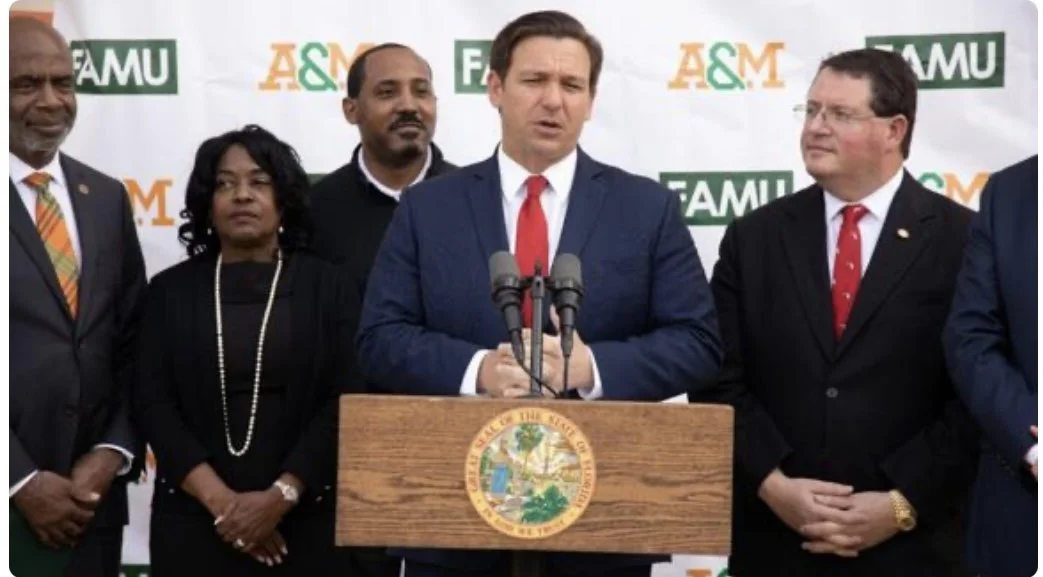
Florida Governor Ron DeSantis is no longer talking about trimming property tax bills at the margins. He is now outlining a path to wipe out property taxes on primary homes altogether, pitching a sweeping reset of how the state funds schools and local services. The proposal would test Florida’s identity as a low‑tax haven, forcing voters to decide whether the promise of owning a home without annual tax bills is worth the tradeoffs that come with it.
As I follow the details emerging from the governor’s office and the Legislature, what stands out is how quickly a series of targeted relief ideas has evolved into a structural overhaul. Earlier moves like one‑time rebates and portability tweaks are now being folded into a broader strategy that leans on the 2026 ballot, new state revenue streams, and a phased transition away from the property tax model that has defined Florida’s growth for decades.
From tax relief to a promise of elimination
The political groundwork for this moment was laid with a series of smaller, easier‑to‑sell tax breaks that softened voters up to the idea of deeper change. Earlier this year, Governor Ron DeSantis proposed $1,000 property tax rebates for Florida homeowners, targeting state‑mandated school property taxes and promising that the rebates, to be issued in December 2025, would still ensure full school district funding for the people of Florida this session, a pledge detailed in the governor’s own rebate announcement. That move signaled that the state was willing to step in directly to cover what had long been a local tax responsibility, a crucial conceptual shift if property taxes are ever to disappear.
In parallel, the governor floated a broader menu of tax changes that included both property and sales tax ideas, framing them as part of a larger effort to give homeowners breathing room. In coverage that asked bluntly, “Is Florida” getting a tax break, the plan was described as a push by Florida Governor Ron DeSantis to cut property taxes while also exploring sales tax changes that could shift more of the burden onto consumption rather than homeownership, a direction captured in the detailed tax relief plan. I see those early proposals as the on‑ramp to the current, far more ambitious promise: not just easing property taxes, but ending them on primary residences altogether.
The phased roadmap and the 2026 ballot test
DeSantis is now describing a phased approach that would use the 2026 ballot as the hinge point for a generational change in Florida’s tax structure. In recent remarks, he laid out next steps to “completely” eliminate property taxes on primary homes, tying the effort to a constitutional amendment that would go before voters in 2026 and emphasizing that any shift must preserve Florida’s reputation for having no state income tax, a balancing act spelled out in coverage of how Florida Gov. DeSantis details the plan. The phased design matters, because it acknowledges that school districts and counties cannot lose their largest revenue source overnight without a replacement.
On the legislative side, the Florida House of Representatives is already moving pieces into place for that 2026 showdown. Lawmakers have advanced several property tax cut proposals for the 2026 ballot, and any constitutional change will require at least 60% approval from voters, a threshold highlighted in reporting on how The Florida House of Representatives is structuring the measures. I read that supermajority requirement as both a political hurdle and a forcing mechanism: if DeSantis wants to deliver on his promise, he has to craft a plan that persuades not just his base but a broad cross‑section of homeowners, renters, and business interests that the replacement revenue system will be stable and fair.
Rewriting the rules for school and rural funding
Behind the headline promise of zero property taxes on primary homes lies a more technical, but critical, debate over how to fund schools and rural communities. In his budget discussions, DeSantis has signaled that the state is prepared to replace at least some school‑related property tax revenue with state dollars, a shift that would centralize control over education funding in Tallahassee. One key piece is Another proposal, labeled HJR 211, which would allow homeowners to transfer their accumulated Save Our Homes benefits to a new primary residence and would also exempt school‑related property taxes in certain circumstances, a combination laid out in coverage of how Another HJR 211 fits into the governor’s rural tax budget. By expanding Save Our Homes portability while carving out school levies, the measure hints at a future where the state shoulders more of the education tab while homeowners see their local bills shrink.
That same budget conversation is also framed as a lifeline for rural counties that rely heavily on property taxes to keep basic services running. If the state replaces school property taxes and gradually takes over other mandated costs, rural areas could, in theory, cut local millage rates without gutting classrooms or sheriff’s offices. Yet the more the state pays, the more it will want to dictate how that money is used, and I see that tension running through the debate over HJR 211 and related proposals. The promise of relief is real, but so is the prospect of tighter state oversight over everything from school staffing to infrastructure priorities in communities that have long guarded their autonomy.
Messaging the ‘revenue reset’ to homeowners
DeSantis and his allies are not shy about the political branding of this shift. On social media, supporters have promoted the idea as a “REVENUE RESET,” celebrating that Florida Gov Ron DeSantis is moving to abolish property taxes on primary homes while still touting the state’s advantage of having no state income tax, a framing captured in an Instagram post that labels the push as LEGISLATION and highlights Florida Gov Ron as the driving force. The message is simple and potent: own a home, pay off your mortgage, and then live without the annual anxiety of a tax bill that can climb even when your income does not.
From a political standpoint, I see that pitch as aimed squarely at middle‑class homeowners who feel squeezed by rising insurance premiums, higher grocery bills, and stagnant wages. By promising to eliminate property taxes on primary residences, DeSantis is offering a concrete, easy‑to‑visualize benefit that contrasts with the more abstract debates over federal tax brackets or interest rates. The branding around a revenue reset also tries to preempt criticism that the plan is reckless by implying that the state is not cutting services, only changing where the money comes from. Whether that reassurance holds up will depend on how clearly the administration can explain the replacement revenue streams and how convincingly it can argue that Florida’s low‑tax identity will survive the transition.
Warnings about housing prices and unintended consequences
Not everyone is convinced that wiping out property taxes on primary homes will be an unalloyed good. Some analysts are already warning that such a dramatic change could fuel another run‑up in housing prices, particularly in a state that is already a magnet for out‑of‑state buyers. Reporting on the debate notes that Florida lawmakers do not seem united on the plan and that there is a Florida House price warning being raised over the push to eliminate property taxes, especially as the proposals move toward the 2026 general election ballot, concerns captured in coverage of the Florida House price warning. If buyers know they can own a home without annual tax bills, they may be willing to bid more, which could lock out first‑time buyers even as existing owners celebrate lower carrying costs.
There is also the question of how the shift would affect renters, who do not pay property taxes directly but feel them indirectly through higher rents when landlords’ costs rise. If the state replaces property tax revenue with broader consumption taxes or other statewide levies, renters could end up paying more without gaining the same direct benefit that homeowners receive. I see that as the core equity challenge in DeSantis’s plan: it is tailored to primary homeowners, particularly those with enough stability to stay put and enjoy long‑term savings, while offering less obvious upside to mobile workers, younger residents, and lower‑income families who rent. Those distributional questions will likely dominate the legislative hearings and campaign ads as the 2026 ballot approaches.
A TALE of TWO FLORI as the debate intensifies
As the contours of the proposal sharpen, the political narrative is already splitting into what feels like a TALE of TWO FLORI. On one side are homeowners in fast‑growing suburbs and coastal communities who see property tax elimination as the logical next step in Florida’s evolution into a low‑tax, high‑growth magnet for retirees and remote workers. They are the natural audience for DeSantis’s phased roadmap and for the Florida House’s willingness to put aggressive tax changes in front of voters, a dynamic that underpins the broader Florida House Advances Property Tax Cut Proposals for the 2026 Ballot. For these Floridians, the idea of paying off a 2022 Toyota Camry and a three‑bedroom house in Orlando at roughly the same time, then facing no more annual tax bills on the home, is a powerful vision of financial security.
On the other side are residents of smaller towns and older urban neighborhoods who worry that the same policy could accelerate gentrification and strain local services. If state‑level replacement funding fails to keep pace with growth or economic downturns, they fear that school boards and county commissions will be left with fewer tools to respond, especially if property taxes are constitutionally capped or eliminated. I find that divide instructive: the debate is not simply about whether taxes are high or low, but about who controls the levers of local government and who bears the risk when the economy turns. As DeSantis presses ahead, the fight over property tax elimination is becoming a proxy for a deeper argument about Florida’s future, one that will play out in budget hearings, campaign rallies, and ultimately in the voting booths when the 2026 ballot arrives.