
Habitat’s Women’s Build Program Brings Hope to Families
By: Shelia Mader
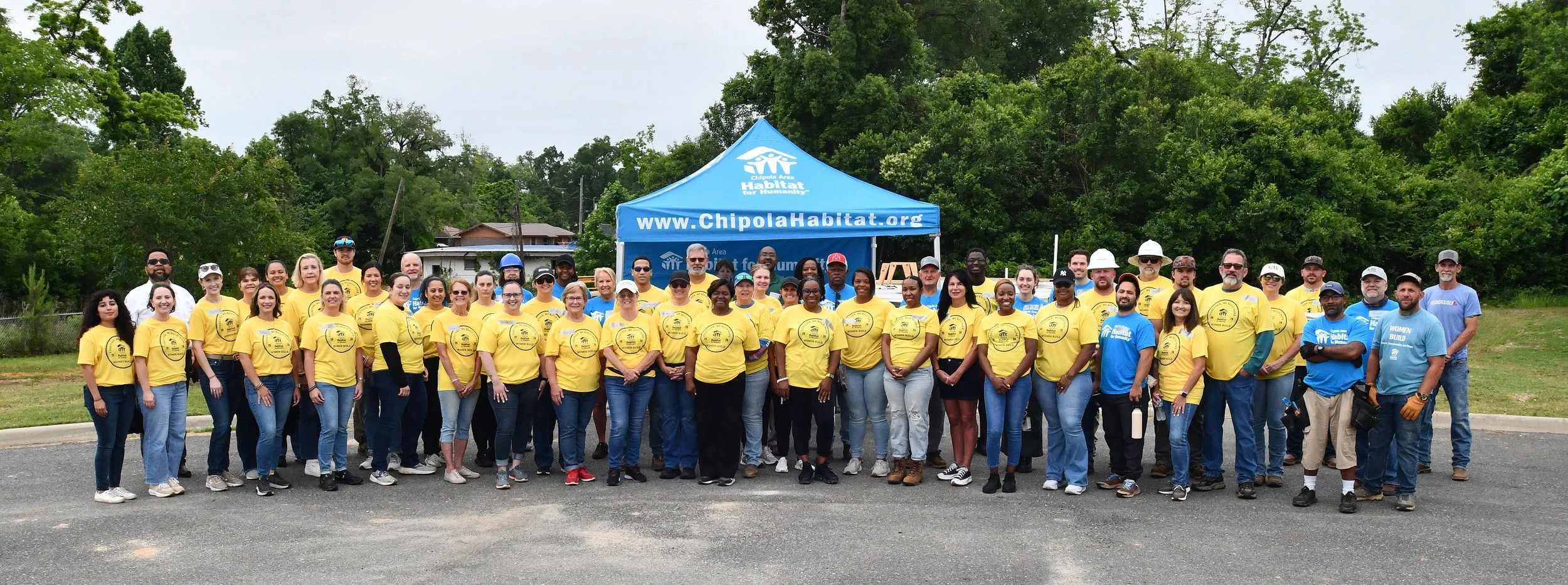
As Women Build volunteers raised walls and hammered nails in two Panhandle communities, they were helping more than just construct houses. They were helping build stability and a future for families who have spent years dreaming of a place to finally call home.
Chipola Area Habitat for Humanity recently began work on another home in the Chipley Heights subdivision in Washington County. The house marks the sixth of nine planned homes in the neighborhood. At the same time, work continues in the Gillis Ridge subdivision in Marianna, where Habitat has now started the fourth home out of seven planned for that community.
Both projects were launched through Habitat’s Women Build initiative, a program that encourages women from across the community to volunteer together on construction sites while supporting affordable housing efforts. Local businesses and community partnerships have played a major role in making the projects possible.
“The thing that I would love to stress is Women Build is successful because of the business partnerships,” Chipola Area Habitat Executive Director Kevin Yoder said. “We enjoy that because of the business partnerships in Jackson County and Washington County. That’s what makes this successful.”
The homes currently under construction will each belong to single mothers with two children. Habitat officials say helping families achieve affordable homeownership can change lives for generations.
“The need for affordable housing is drastic across the entire community, but very much so when there’s only one person bringing in income,” Chipola Area Habitat Programs Director Cynthia Williams said. “The opportunity to serve these particular families is always a blessing from Chipola Area Habitat’s standpoint because the goal is to provide decent, safe, affordable shelter. Affordable being a key component when you’re a single parent.”
Williams said the long-term stability of homeownership creates lasting benefits not only for parents but also for their children.
“Specifically for these families, the ability to take that stress off, the ability to know that ‘I’m going to have this forever,’ but then also for their children, they don’t have to wonder where home is anymore,” Williams said. “That is so drastically impactful when you talk about the stability not only for the parent but also for the child.”
In the Gillis Ridge subdivision, two Habitat homes are already occupied, including one family that recently celebrated a birthday party in their new house. A third home is nearing completion, while the fourth home was officially started during the Women Build event. Yoder said the next house in the subdivision is expected to begin later this summer.
The Washington County project is expected to be completed in early fall, meaning the family could be celebrating Christmas in their new home this year.
For future homeowner Pilya Chaney, the experience already feels life-changing. “Becoming a homeowner is something that I’ve always wanted to be,” Chaney said. “Since I was a little girl, I’ve always heard about Habitat for Humanity, and it was something that has always been on the brain. But for it to come to fruition and actually see a house actually being built, it is amazing. My son and I are excited to finally have something that is our own.”
Habitat homeowners do not receive houses for free. Families selected for the program must meet income qualifications, complete financial education requirements, and contribute hundreds of hours of “sweat equity,” helping build their homes and the homes of others. Chipola Area Habitat requires 500 hours of sweat equity before closing on a home.
Habitat for Humanity’s Women Build program has become a nationwide movement, empowering women to take active roles in construction while helping address the growing affordable housing crisis. Volunteers of all skill levels participate, from first-time builders to experienced contractors, working side-by-side to provide safe housing opportunities for local families.
For the families waiting to move into these homes, the work represents more than lumber and concrete. It represents security, independence and the chance to build a better future for their children.
