
Merritt's Mill Pond Management Falls Under State Oversight, Not Jackson County
By Shelia Mader
Few places in Jackson County are as recognizable or as treasured as Merritt's Mill Pond. From its crystal-clear waters and world-renowned cave diving to boating, fishing and family recreation, the spring-fed waterway has become one of the county's most cherished natural resources.
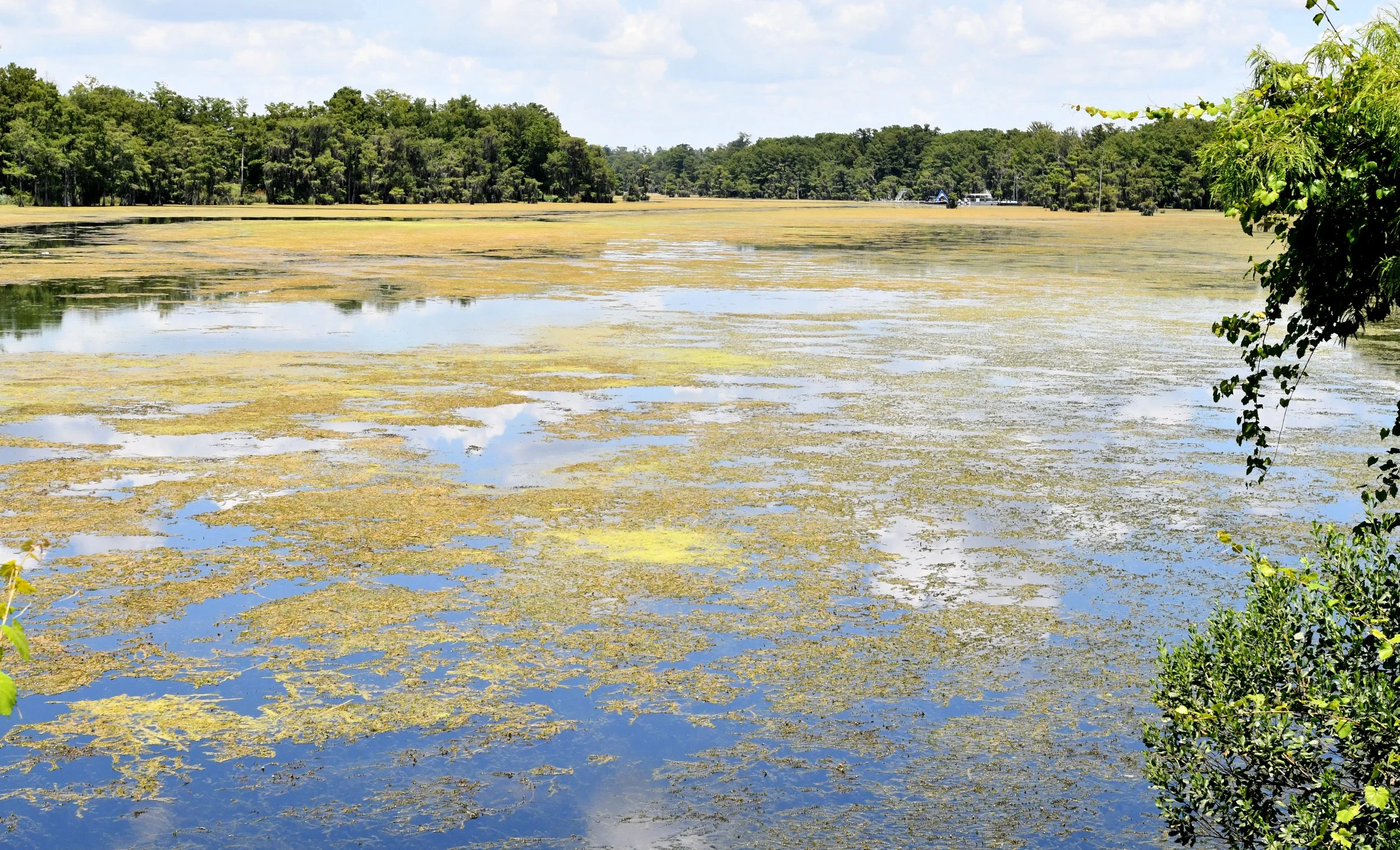
Over the past several years, however, one issue has surfaced repeatedly among residents and visitors alike: hydrilla.
The invasive aquatic plant has become increasingly noticeable in portions of the pond, prompting concerns from property owners, anglers, boaters and outdoor enthusiasts. As those concerns have grown, so too has one recurring question: Why doesn't Jackson County simply remove it?
The answer is straightforward, although not always widely understood.
While Merritt's Mill Pond lies within Jackson County, management of the waterbody itself, including aquatic vegetation such as hydrilla, falls under the authority of the State of Florida. The Florida Fish and Wildlife Conservation Commission (FWC) serves as the lead agency responsible for managing invasive aquatic plants in public waters throughout the state, including Merritt's Mill Pond. Water quality planning and long-term protection of the spring system are also coordinated through the Florida Department of Environmental Protection (DEP).
That means Jackson County does not have the authority to independently spray, harvest or otherwise manage hydrilla growing within the pond. County officials can work alongside state agencies, relay concerns from residents, request evaluations and advocate for additional attention when necessary, but decisions regarding treatment methods, timing and management ultimately rest with the state.
Hydrilla is considered one of Florida's most aggressive invasive aquatic plants. Introduced decades ago, it spreads rapidly beneath the water's surface, creating dense mats that can impede boating, reduce water circulation and crowd out native vegetation if left unmanaged.
Completely eliminating hydrilla, however, is rarely the goal.
According to FWC, aquatic plant management focuses on maintaining a healthy ecological balance while preserving public access for recreation and navigation. Small to moderate amounts of hydrilla can provide habitat for fish and other aquatic life, while excessive growth can interfere with boating, fishing, swimming and the overall health of the waterbody. Because of that balance, treatments are carefully planned rather than aimed at total eradication.
Management efforts at Merritt's Mill Pond have included multiple treatment strategies over the years.
State officials have utilized selective aquatic herbicides designed to target hydrilla while minimizing impacts to desirable native vegetation. Biological controls, including the stocking of sterile triploid grass carp, have also been employed to help reduce hydrilla growth naturally over time. In addition, FWC routinely surveys the pond to monitor vegetation levels and determine when additional management actions are warranted.
During 2024, state agencies conducted additional hydrilla treatments using several approved aquatic herbicides while continuing biological control efforts and ongoing monitoring. Those actions were part of a broader management strategy developed specifically for Merritt's Mill Pond based on changing conditions throughout the year.
Recognizing the public's growing concern, Jackson County also issued information explaining the county's role in the process. County officials noted they have worked with state agencies to communicate local concerns and encourage continued attention to the pond, while emphasizing that management authority remains with the State of Florida.
In short, the county serves as an advocate rather than the decision-maker.
That distinction is important because county commissioners and administrators frequently receive calls regarding hydrilla conditions. While they cannot authorize treatments themselves, they can document concerns, communicate with FWC and request that state officials evaluate conditions if residents believe vegetation has become excessive or poses safety concerns.
The long-term health of Merritt's Mill Pond extends beyond hydrilla management alone.
The Florida Department of Environmental Protection continues implementing water quality protection efforts for the Jackson Blue Spring and Merritt's Mill Pond basin through its Basin Management Action Plan. Those initiatives focus on protecting the spring system by reducing nutrient pollution and preserving water quality for future generations while complementing FWC's aquatic plant management responsibilities.
For residents wondering whom to contact when concerns arise, county officials encourage reporting significant issues locally so they can be shared with the appropriate state agencies. Likewise, residents may also contact FWC directly regarding aquatic vegetation concerns.
Merritt's Mill Pond remains one of Northwest Florida's signature natural attractions, drawing visitors from across the country to experience its remarkable clarity, abundant wildlife and recreational opportunities. Maintaining that resource requires cooperation among local government, state agencies and the citizens who enjoy it.
Although Jackson County cannot independently manage hydrilla within the pond, county leaders continue serving as the community's voice by bringing concerns to state officials and advocating for continued monitoring and treatment when conditions warrant.
Understanding those responsibilities helps explain why decisions affecting Merritt's Mill Pond often originate in Tallahassee rather than at the Jackson County Administration Building.
As hydrilla management continues, one thing remains unchanged: preserving Merritt's Mill Pond for future generations is a shared goal, even though the responsibility for carrying out that mission rests primarily with the State of Florida.
