
Simpson faces packed house in Jackson County over new ag inspection stations
By: Shelia Mader
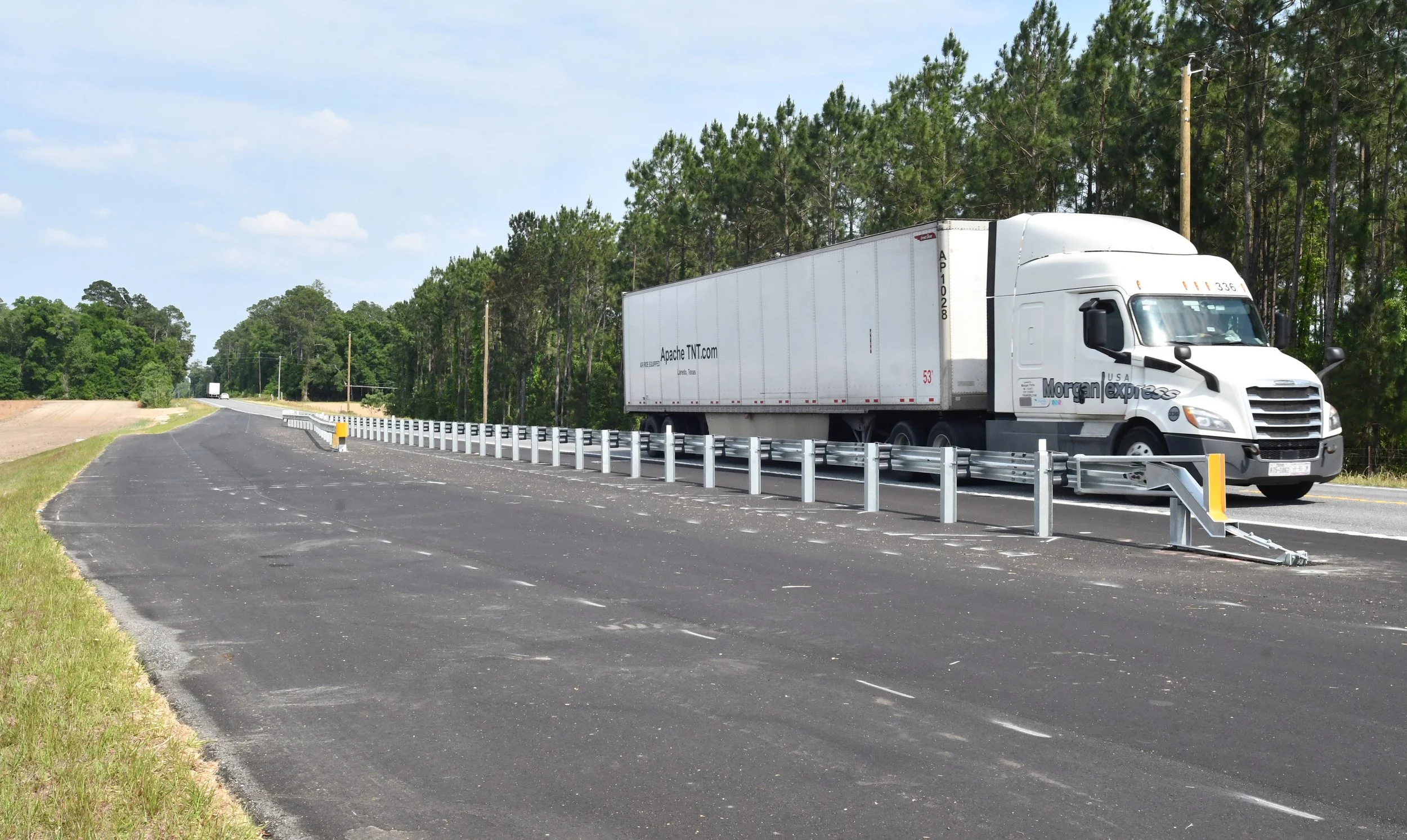
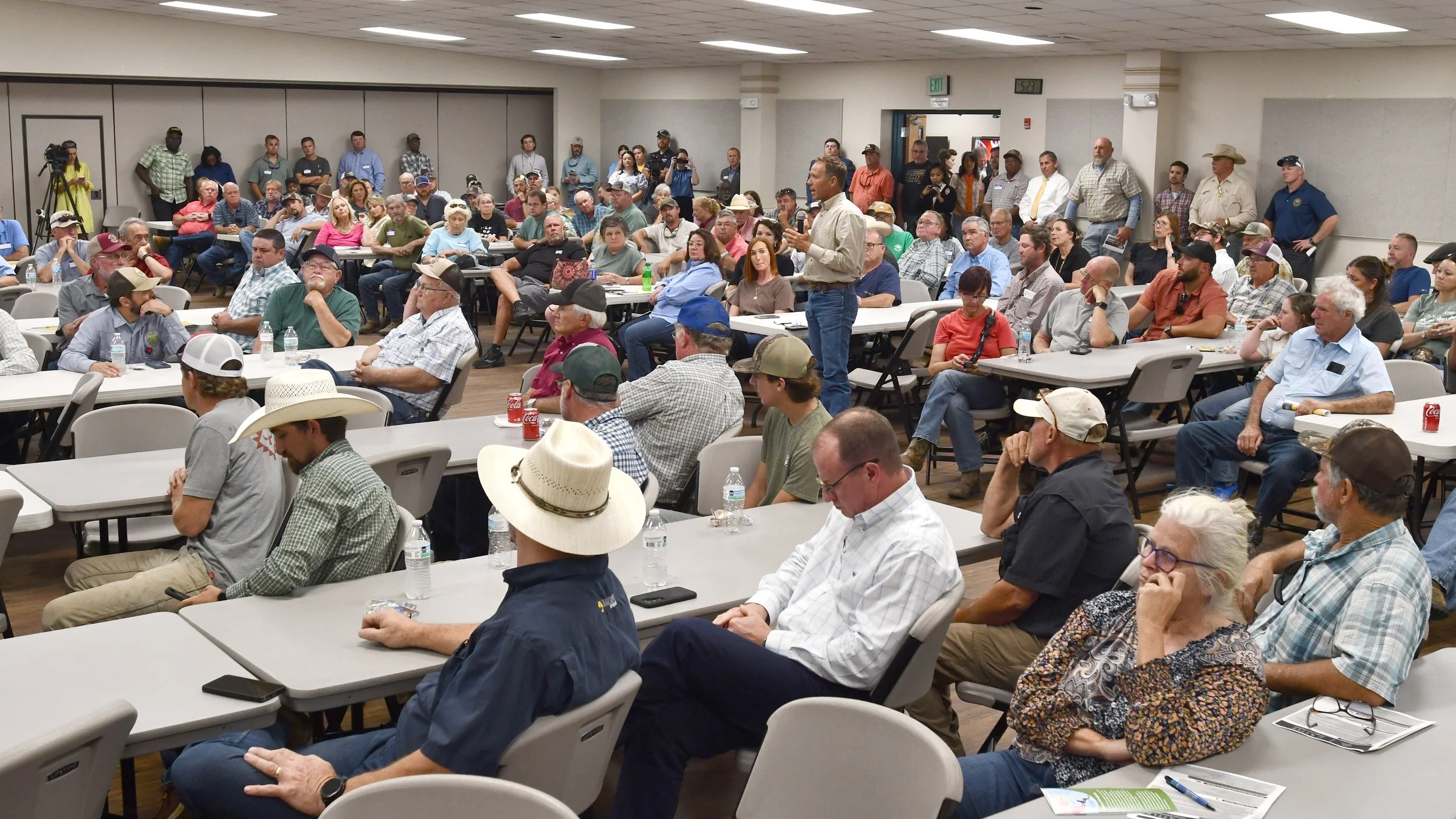
A standing-room-only crowd turned out in Jackson County Monday evening as Florida Agriculture Commissioner Wilton Simpson addressed growing concerns over two new agricultural interdiction stations under construction for the area, one on U.S. 231 near the Alabama line and another on Highway 2 near the Georgia border.
Local farmers, ranchers, agribusiness owners, and elected officials filled the meeting, raising a wide range of questions about how the stations will affect day-to-day agricultural operations in a region where crossing state lines is routine.
Simpson, a lifelong farmer from Pasco County, framed the stations as a long-needed effort to protect Florida agriculture from outside threats.
“These stations are about drugs, bugs, and thugs,” Simpson said, emphasizing their role in stopping invasive pests, contaminated food, stolen equipment, and criminal activity before it enters the state.
He pointed to recent enforcement successes statewide, including hundreds of recovered stolen trailers, drug seizures, and arrests tied to human trafficking and other crimes.
Simpson clarified early on why Jackson County was chosen. He said the U.S. 231 corridor has long been considered a major “gap” in Florida’s agricultural enforcement network.
“The bad guys know where the holes are,” he said. “If something’s coming into Florida uninspected, it’s just as likely to come through here.”
The Highway 2 location, he clarified, will function differently. Rather than a full station, it will operate as a “pullover lane” where trucks are stopped selectively for inspection.
Farmers were quick to express their concerns over a continued disruption in their daily routine. Despite assurances, many in the audience voiced concern about how the stations will affect the flow of crops, livestock, and equipment, especially during peak seasons like peanut harvest.
Producers repeatedly stressed that agriculture in Jackson County depends on constant cross-border movement into Alabama and Georgia.
One of the most discussed topics of the night was a proposed transponder system that would allow pre-approved agricultural operators to bypass inspection stops.
Simpson said the system could be in place within months. “If you’re a clean operator using best management practices, you’ll be able to go past those interdiction stations without stopping,” he said.
However, details remain unsettled, particularly whether participation will require enrollment in best management practices programs and whether other states will recognize the system.
Heavy traffic from large trucks was a main concern also concerning the Highway 2 location. Among the most pressing concerns came from Dr. Daniel Colvin of North American Farms in Bascom, whose operation ships up to 150 refrigerated trucks a day during peak season. Colvin warned the system could create serious bottlenecks. “Our farm is about three-quarters of a mile from your station,” Colvin said. “Some mornings there are already dozens of trucks lined up. We’re concerned about overwhelming your capacity.”
Colvin’s operation supplies major national retailers, and delays could ripple through the supply chain.
Simpson responded that the new station has been designed for higher capacity and faster processing than older facilities, with wider lanes and updated technology. He added that most trucks will not be stopped and inspections will be selective.
Agribusiness representatives also raised concerns about the sheer volume of equipment moving between facilities on both sides of the state line. One peanut buying operation described managing dozens of wagons and trailers shared between locations in Alabama and Florida, sometimes making multiple trips per day.
Simpson acknowledged that the scale of those operations requires flexibility. “We’re going to have to figure that out,” he said, adding that exemptions or seasonal accommodations may be necessary.
Major concerns were voiced about the transporting of horses back and forth across state lines. One of the more pointed, and at times emotional, exchanges came from Karl Kressman, a local horse owner who works cattle across state lines. Kressman questioned why he would need health certificates to bring his horses back into Florida after short trips into Alabama, even for routine veterinary care.
“If I haul my horse across the river to the nearest vet and come back, I’m in violation?” he asked.
He also expressed frustration with what he described as a shift in tone from traditional agricultural inspectors to a more law enforcement-style presence. “When I did this work years ago, we wore hats and visited with people,” Kressman said. “Now it feels more like enforcement than cooperation.”
State veterinarian Dr. Michael Short acknowledged the issue and said officials are working on a common-sense solution for routine cross-border livestock movement.
“We know that’s a problem,” Short said. “We’re trying to figure out a way so you’re not having to get a health certificate every time you cross the line.”
The meeting also highlighted confusion over existing livestock regulations, particularly differences between cattle and horses.
Officials explained that cattle purchased through USDA-approved livestock markets can cross state lines with fewer requirements, while horses, often sold privately, require stricter documentation.
Several attendees argued that inconsistency doesn’t reflect real-world conditions.
Throughout the meeting, the proposed transponder system emerged as the most promising solution to reduce disruptions.
The devices would allow registered operators to move through stations without stopping, particularly for routine agricultural transport.
Simpson said the state plans to actively reach out to farmers when the system becomes available, though there will be a cost. “There’s always a cost to doing business,” he said.
Simpson repeatedly emphasized that the department does not intend to interfere with legitimate agricultural operations. “Our goal is to protect agriculture and stay out of the way of agriculture as best we can,” he said.
He encouraged producers to report problems directly to his office and pledged quick responses.
By the end of the meeting, it was clear that while many in the room support the goal of protecting Florida agriculture, significant concerns remain about implementation.
From livestock health rules to truck traffic, equipment logistics, and cross-border coordination, nearly every speaker highlighted the complexity of agriculture in a border county.
As one attendee noted, “If there’s 100 people here, there’s 100 different situations.”
For now, state officials say they are still in a “listening phase,” with many policies, including transponders and exemptions, still being finalized before the stations open later this year.
