
The Tiny Terror of the Panhandle: Why Gnats Love Northwest Florida
By: Shelia Mader
If you've lived in the Florida Panhandle for any length of time, you've probably experienced it: stepping outside on an otherwise beautiful day only to be immediately surrounded by a cloud of tiny flying pests determined to crawl into your eyes, nose, ears, and mouth.
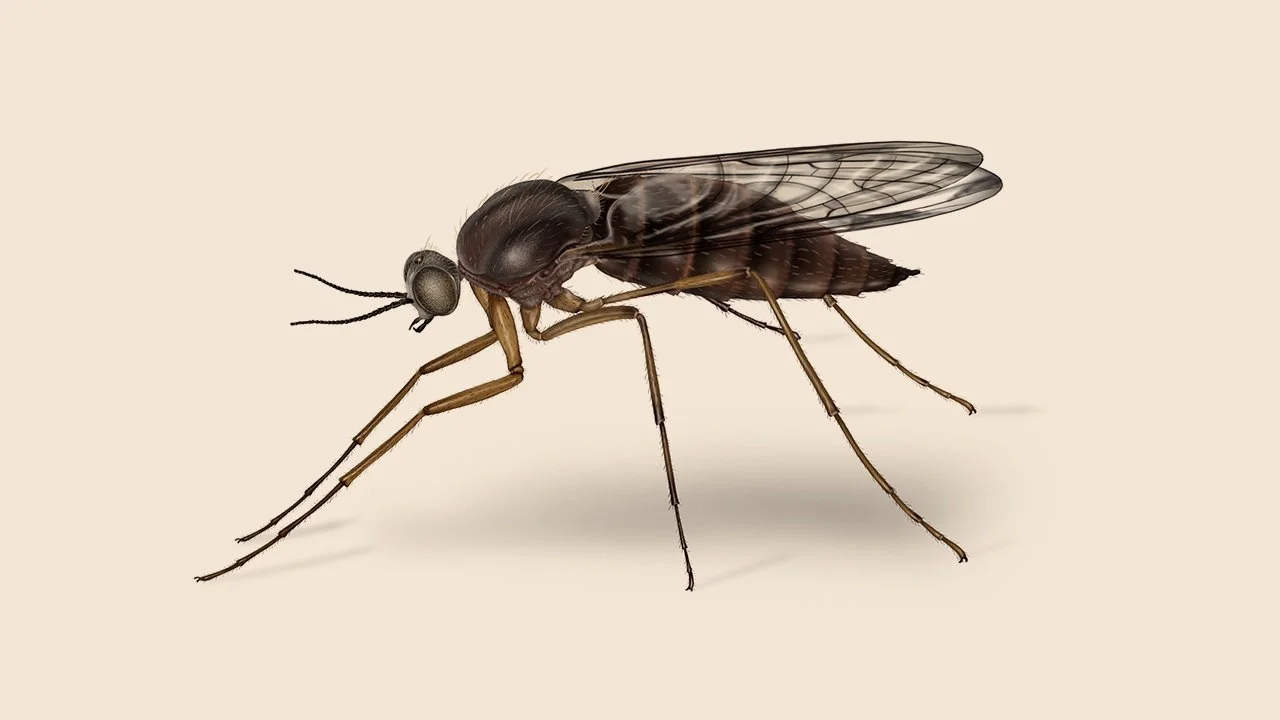
They're commonly called gnats, but several different species fall under that nickname. In Northwest Florida, the biggest culprits are biting midges, often called "no-see-ums," along with various species of non-biting gnats that thrive in the region's warm, humid climate.
The Florida Panhandle provides almost perfect conditions for gnats. Warm temperatures, frequent rainfall, wetlands, rivers, ponds, marshes, and dense vegetation create ideal breeding grounds.
Many species lay eggs in moist soil, decaying organic matter, or shallow standing water. After heavy rains, populations can explode within days.
The region's long growing season also means gnats remain active for much of the year. While many northern states get a winter break from insect activity, Panhandle residents often deal with gnats from early spring through late fall, and sometimes even during mild winter periods.
Gnats have been part of the Gulf Coast ecosystem for thousands of years. Long before homes, subdivisions, and shopping centers appeared across the panhandle, coastal marshes and freshwater wetlands supported enormous insect populations. These insects play important ecological roles, serving as food for birds, bats, fish, dragonflies, and other wildlife.
The problem isn't that gnats are new. It's that people increasingly live, work, and recreate in habitats where gnats have always thrived.
Gnats use several methods to locate their targets. Some species are attracted to carbon dioxide, which humans exhale with every breath. Others are drawn to body heat, sweat, moisture, and even dark-colored clothing.
This explains why a person mowing the lawn on a humid summer evening often becomes a magnet for swarms.
Most gnats in the Panhandle are more annoying than harmful. However, biting midges can leave itchy welts and cause allergic reactions in sensitive individuals. Constant scratching can sometimes lead to secondary skin infections.
Fortunately, gnats are not considered major disease carriers in Florida the way mosquitoes can be.
Completely eliminating gnats is nearly impossible, especially in areas near woods, wetlands, or water.
However, residents can reduce their numbers:
• Eliminate standing water around the home.
• Clean gutters regularly.
• Remove piles of wet leaves and decaying vegetation.
• Repair leaking outdoor faucets.
• Use outdoor fans on patios and porches. Gnats are weak fliers and struggle in moving air.
• Wear light-colored clothing when outdoors.
• Apply EPA-approved insect repellents when necessary.
For homeowners battling swarms indoors, checking window screens and door seals can make a significant difference.
Many Panhandle residents have learned that gnats are often most active during calm mornings and evenings.
Scheduling outdoor activities during breezier parts of the day can dramatically reduce encounters.
Like afternoon thunderstorms, humidity, and mosquitoes, gnats are simply part of life in Northwest Florida. They may be tiny, but their ability to ruin a picnic, ballgame, fishing trip, or backyard barbecue has made them one of the most universally disliked creatures in the south.
And while science can explain why they're here, that knowledge offers little comfort when one flies straight into your eye.
