
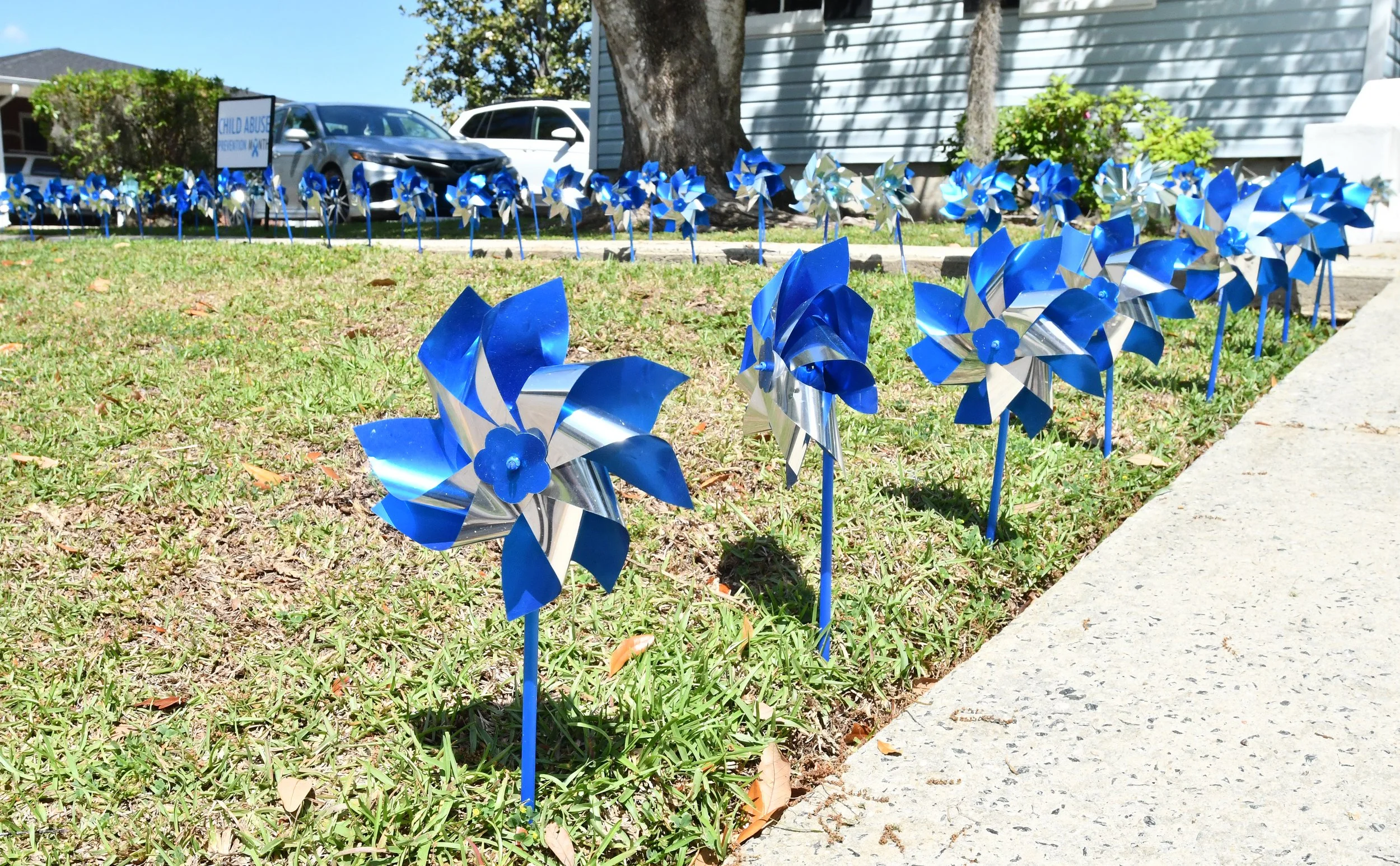
April is National Child Abuse Awareness and Prevention Month.
By: Shelia Mader
April is recognized nationwide as Child Abuse Prevention Month, a time dedicated to raising awareness and encouraging communities to stay alert to the signs of abuse and neglect. In Jackson County, that message is being reinforced locally, with advocacy groups marking the start of the month by placing pinwheels on display April 1, a symbol of childhood and the importance of safe, healthy environments for children.
While abuse is not always easy to recognize, experts say there are often warning signs that, when taken together, can signal a child may be in danger. Physical indicators can include unexplained bruises, burns, or fractures, especially when injuries appear in different stages of healing or in less common areas such as the back, thighs, or neck. Some children may flinch at touch or seem unusually fearful of going home.
Behavioral changes are also common. A child who suddenly becomes withdrawn, anxious, aggressive, or fearful of certain adults may be trying to cope with something serious. Frequent absences from school or noticeable shifts in mood can also be red flags.
Neglect, one of the most common forms of abuse, may show up as poor hygiene, consistently dirty clothing, untreated medical issues, or signs of hunger such as hoarding food. Emotional abuse can be harder to spot but may present as extreme behavior, low self-esteem, or delayed emotional development. In some cases, children who have experienced sexual abuse may display knowledge or behavior that is not age-appropriate, avoid certain people or places, or complain of physical discomfort.
Advocates say one of the biggest barriers to reporting suspected abuse is uncertainty. Many people hesitate because they feel they need proof before taking action. However, that is not the case.
“I think that people think that they have to absolutely for sure know that an abuse has happened to make a report. However, if you suspect it you don’t have to prove it. If you suspect it, then you can make a report and let the professionals go out and check on that child,” said Kennesse Dew with the Gulf Coast Children’s Advocacy Center.
Officials emphasize that no single sign proves abuse, but patterns should not be ignored. If something does not seem right, it is important to trust that instinct. Adults are encouraged to remain calm and supportive if a child shares information, listening without judgment and reassuring the child that they are not at fault.
In Florida, reporting suspected abuse is not just encouraged, it is required. “In the state of Florida, everyone is a mandatory reporter,” Dew said. “You can call the child abuse hotline, which is 1-800-96-ABUSE, or you can talk to professionals everywhere that can help with that, law enforcement, us, DCF, school personnel. There are many places that you can get help.”
Reports can be made through the Florida Abuse Hotline at 1-800-96-ABUSE (1-800-962-2873) or online through the Department of Children and Families. If a child is in immediate danger, calling 911 is advised.
Advocates stress that speaking up can make a life-changing difference for a child. “Children matter; they are our future,” Dew said. “Making sure that they grow up healthy and safe and having a voice and being able to use that voice is super important.”
Taking action can feel difficult, but professionals say reporting concerns allows trained investigators to assess the situation and potentially protect a child from further harm.
