
Florida Native Tommy Nocera Makes Case for Jackson County Data Center
By Shelia Mader
Tommy Nocera, a first-generation Florida native who grew up in Tallahassee and now lives in Barcelona, Spain, says his proposed data center in Jackson County is being misunderstood, and the numbers, he says, prove it. The Times had an extensive interview with Nocera last week and he shared his thoughts, research, and information on the data center he and his family are proposing.
His proposal uses vastly less water than traditional agriculture. It produces its own off-grid energy. It doesn’t rely on the power grid. It remains silent, keeps the night sky dark, and provides millions in annual tax revenue, high-paying jobs, and an economic ripple effect throughout the greater economy.
Not all data centers are the same. Project 231, the name Nocera’s team uses for the Alford Technology Campus, should be evaluated on its specific design and operating commitments rather than assumptions drawn from unrelated facilities.
The Watered Numbers
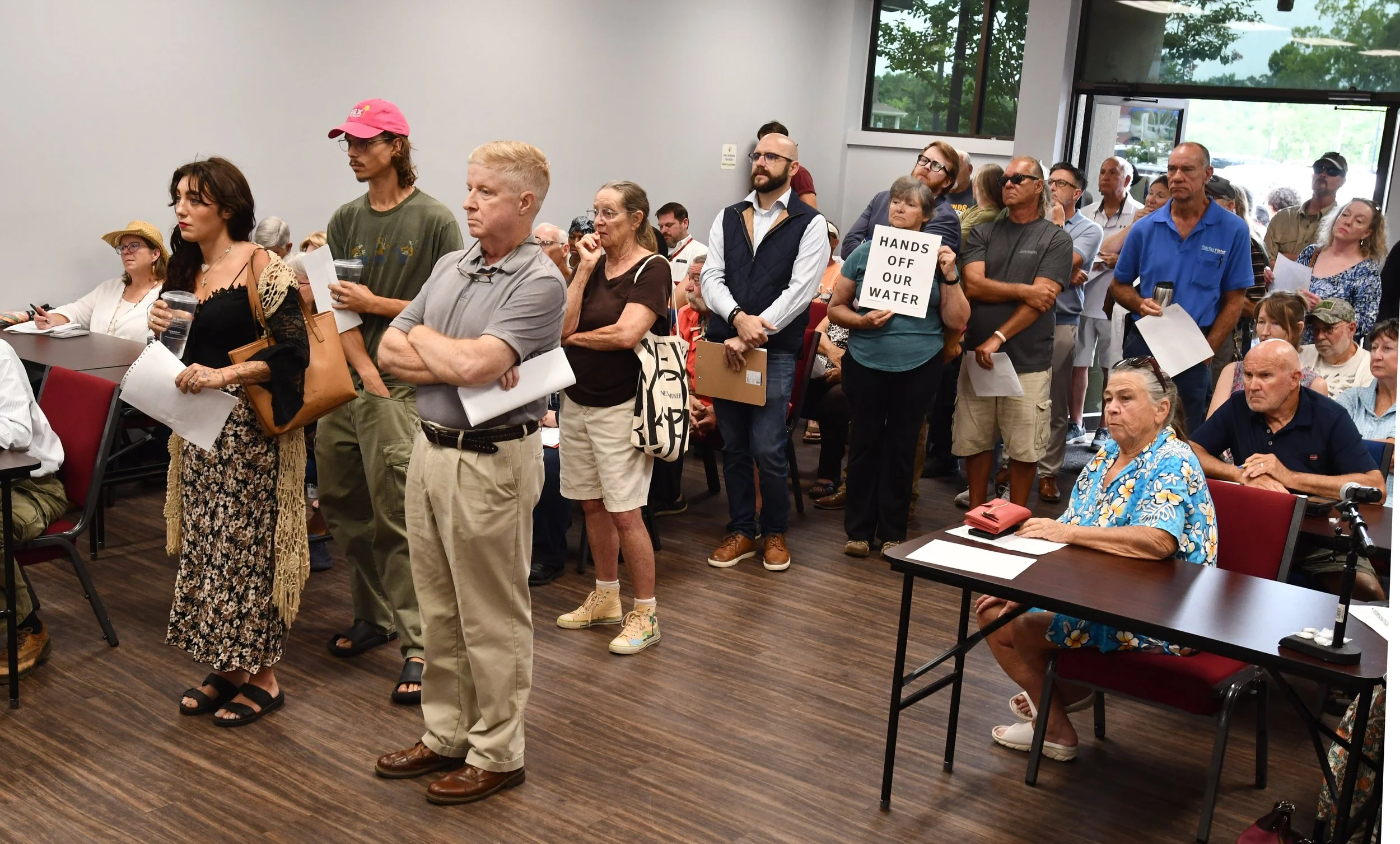
Water has been the central concern for Jackson County residents, and Nocera says the numbers resolve that issue.
Corn uses 65 times more water every single day than Project 231 uses in an entire year.
The corn farm pays $462 per year in property taxes. Project 231 pays $2.9 to $3.5 million per year.
If someone planted corn on the 77 usable acres of Nocera’s parcel, a use explicitly permitted today under AG-1 agricultural zoning without any public hearing, any commissioner vote, or any application, that farm would consume approximately 532,000 gallons of water per day from the Florida Aquifer during peak growing season. That is up to 194 million gallons per year. Under Florida’s Greenbelt Law that corn farm would pay approximately $462 per year in property taxes.
“Nobody has called a public meeting about the corn farmer,” Nocera said.
Project 231 is designed around a closed-loop non-evaporative cooling system that recirculates water rather than continuously consuming it. Current estimates call for a one-time commissioning fill of approximately 539,000 gallons plus approximately 450 gallons for fuel cell startup, the facility’s total lifetime water draw. After commissioning, annual maintenance water use is estimated at approximately 8,200 gallons. No surface water withdrawal is proposed.
The facility connects to the Florida Gas Transmission pipeline approximately two-tenths of a mile south of the property and uses Bloom Energy solid oxide fuel cell technology to generate electricity without combustion, without an exhaust stack, and without drawing power from the public electrical grid. Bloom fuel cells are used in over 1,200 locations worldwide, including hospitals, military installations, and universities. The company’s SEC filings confirm near-zero smog-forming pollutants: no nitrogen oxides, no particulate matter, no sulfur dioxide.
Noise, Visibility, and Light
The existing tree line runs 60 to 70 feet tall. The facility stands 28 feet, less than half the height of the trees. Nocera has committed to preserving the perimeter tree line permanently, excepting camouflaged entry and exit points.
“Nobody driving by will ever know it’s there,” he said. “This building is smaller than the Walmart Supercenter in Marianna.”
Bloom Energy publishes its noise specification publicly: less than 65 decibels at 10 feet, equivalent to a normal conversation. Lighting will be directed inward and shielded to preserve the night sky.
“The night sky stays dark,” Nocera said. “The quiet stays quiet.”
The Economic Case
Project 231 is expected to generate $2.9 to $3.5 million in annual property taxes, approximately 2.5 percent of Jackson County’s entire $126 million annual budget, from a single parcel currently generating around $300 per year. It requires no county water, sewer, electrical, or other public infrastructure. Every dollar is net positive.
That revenue is enough to fund approximately 70 additional EMTs, or 60 additional teachers, or nearly 3 miles of repaved roads, every single year, without a referendum or a bond issue.
The facility creates approximately 40 permanent positions paying above Jackson County’s median income. Each direct job supports approximately four additional jobs locally, meaning 40 permanent jobs support approximately 160 additional positions in Jackson County. The project is privately funded. Jackson County taxpayers will not finance a single dollar of construction.
“Business begets more business,” Nocera said. “Every employee eats lunch somewhere in Jackson County.”
The Personal Connection
“I spent my childhood summers swimming in the springs that make this part of Florida special,” Nocera said. “I would never propose anything that puts them at risk.”
Nocera’s family has owned property near U.S. Highway 231 and County Line Road for over twenty years. The parcel sits across the highway from a motocross training facility and a used auto parts dealer and generates roughly $300 in property taxes per year.
“We are not the faceless corporation that scared this community. We are a family that spent years trying to find the right use for this parcel. We went through the proper channels. We disclosed everything.”
The Filing and What Comes Next
Nocera filed a small-scale Future Land Use Map amendment on June 8, 2026, for the southern 50 acres. The Jackson County Senior Planner accepted the application and issued a signed confirmation letter on official letterhead the same day. The following day, the Board of County Commissioners voted to ban all data centers before the proposed moratorium ordinance was read into the record. A second reading and final vote are scheduled for June 23.
“I want people to meet me this weekend and ask me anything,” Nocera said. “We’re an open book. Jackson County deserves to make this decision based on facts, not fear. We are confident you will like what you see.”
