
Jackson County Commissioners Approve Data Center Ban After Third Public Hearing
By: Shelia Mader
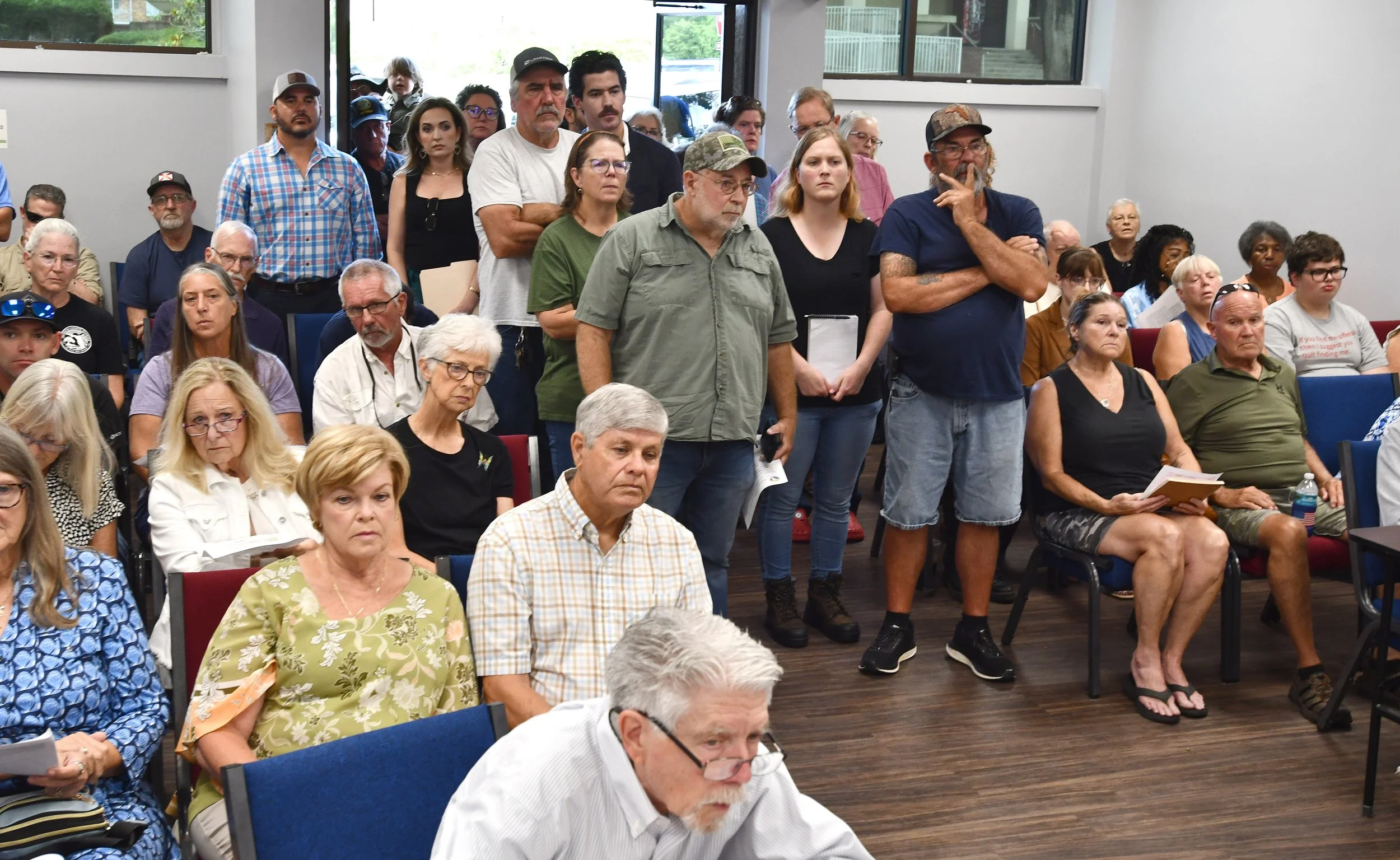
After weeks of debate and three public meetings packed with residents, the Jackson County Board of County Commissioners voted Tuesday to approve an ordinance banning data centers in the county's unincorporated areas. The ordinance replaces an earlier proposed moratorium and reflects growing public opposition to a proposed AI-focused data center project near Compass Lake.
Before the final vote, commissioners approved two amendments to strengthen the ordinance. Commissioner Paul Donofro successfully added language directing county staff to review and develop future comprehensive plan and land development code amendments addressing issues such as water usage, electrical infrastructure, noise, lighting, environmental impacts, emergency services, traffic, and compatibility with surrounding land uses. County attorney Clayton Knowles said the changes would not weaken the ban but would help the county develop future regulations consistent with state law.
Commissioner Edward Crutchfield also succeeded in removing a provision that would have allowed the board to grant exceptions for certain projects. Crutchfield argued that eliminating the exemption would make it more difficult for future data center proposals to gain approval. The amendment passed on a 4-1 vote, with Commissioner Donofro voting no.
Attorney Knowles explained that the ordinance establishes an outright prohibition on data centers and associated facilities in unincorporated Jackson County and noted that future boards retain the authority to amend or repeal the ordinance through the legislative process.
Commissioners Weigh Economic Development Against Community Concerns
Commissioners largely emphasized protecting local resources and preserving the county's rural character.
Chairman Jamey Westbrook delivered one of the strongest statements against data center development. "I would just as soon not have data centers, period. ... I was raised here, I've been here all my life... and I don't want to sell this county for a dollar."
Westbrook added that while outside developers may come and go, county residents will continue living with the consequences of any large-scale industrial project.
Donofro, the lone commissioner opposing the removal of the exception language, said he wanted the county to retain flexibility if a future project could demonstrate no adverse impacts on water, power infrastructure, noise, or surrounding residents. However, he also stressed the need to protect Jackson County's natural resources and citizens.
Commissioner Dr. Willie Spires cautioned that no current board can permanently bind future elected officials, a point echoed by Knowles during the discussion.
Public Comments Focus on Water, Transparency and Quality of Life
Public comment was overwhelmingly opposed to the proposed AI data center project.
Theryn Engal, a Marianna resident and owner of Paradise in the Panhandle, challenged claims made by project representatives regarding environmental impacts and economic benefits. Engal described the project as a form of "greenwashing" and argued that promised tax revenues would be insignificant compared to the company's broader financial obligations.
"Bloom is not a green data center. Bloom Energy servers emit significantly more CO2 than the electric grid in key states where it operates."
Alan Barber, a Jackson County resident, sought to clarify several points discussed during the meeting. Barber emphasized that the ordinance under consideration would apply to all data centers regardless of size and stated that no project had been approved behind closed doors. "Nothing has been approved by the county behind the scenes."
Barber explained that the only action taken so far was acceptance of an application for a land-use and zoning change, which would still require multiple levels of review and approval before any development could proceed.
Karen Schoen urged commissioners to strengthen enforcement provisions within the ordinance. She expressed concern that future developers could attempt to circumvent restrictions by changing project names or operating through shell companies. "People will come here and unfortunately not tell the truth."
Schoen suggested adding penalty provisions and requiring applicants to bear the cost of studies, enforcement actions, and potential litigation. She also questioned who would ultimately own and control data collected through AI-related operations.
Tom Hicks, a longtime Compass Lake resident, focused his comments on water resources. Hicks described declining lake levels and reduced spring flows and warned that large-scale groundwater withdrawals could further impact local water systems.
"Something's going wrong with aquifer feed." He urged county leaders to carefully consider any future proposals involving deep wells and significant groundwater extraction near Compass Lake.
Developer Continues to Push for Consideration
Project representative and landowner Tommy Nocera asked commissioners not to close the door entirely on his proposal. Nocera argued that his planned facility would differ significantly from conventional data centers because it would rely on closed-loop cooling systems and on-site energy production.
Nocera claimed the project could generate between $3.5 million and $6.5 million annually in tax revenue, create hundreds of construction jobs, and support dozens of permanent positions. He also maintained that water use would be limited to an initial fill of approximately 539,000 gallons followed by minimal annual replenishment.
Despite those assurances, numerous speakers challenged the project's economic projections, environmental claims, and long-term commitments to the community.
Ordinance Applies Only to Unincorporated Areas
The newly approved ordinance applies only to unincorporated Jackson County. Municipalities within the county would have to adopt their own restrictions if they choose to regulate data centers. It was also noted that future county commissions retain the ability to revisit or repeal the ordinance.
The vote marked the culmination of three contentious public meetings and a sustained grassroots effort by residents who argued that large-scale AI data center development posed unacceptable risks to Jackson County's water resources, infrastructure, and rural character.
