
JCSB Faces Hard Choices on Staffing, Budget, and Declining Enrollment
By: Shelia Mader
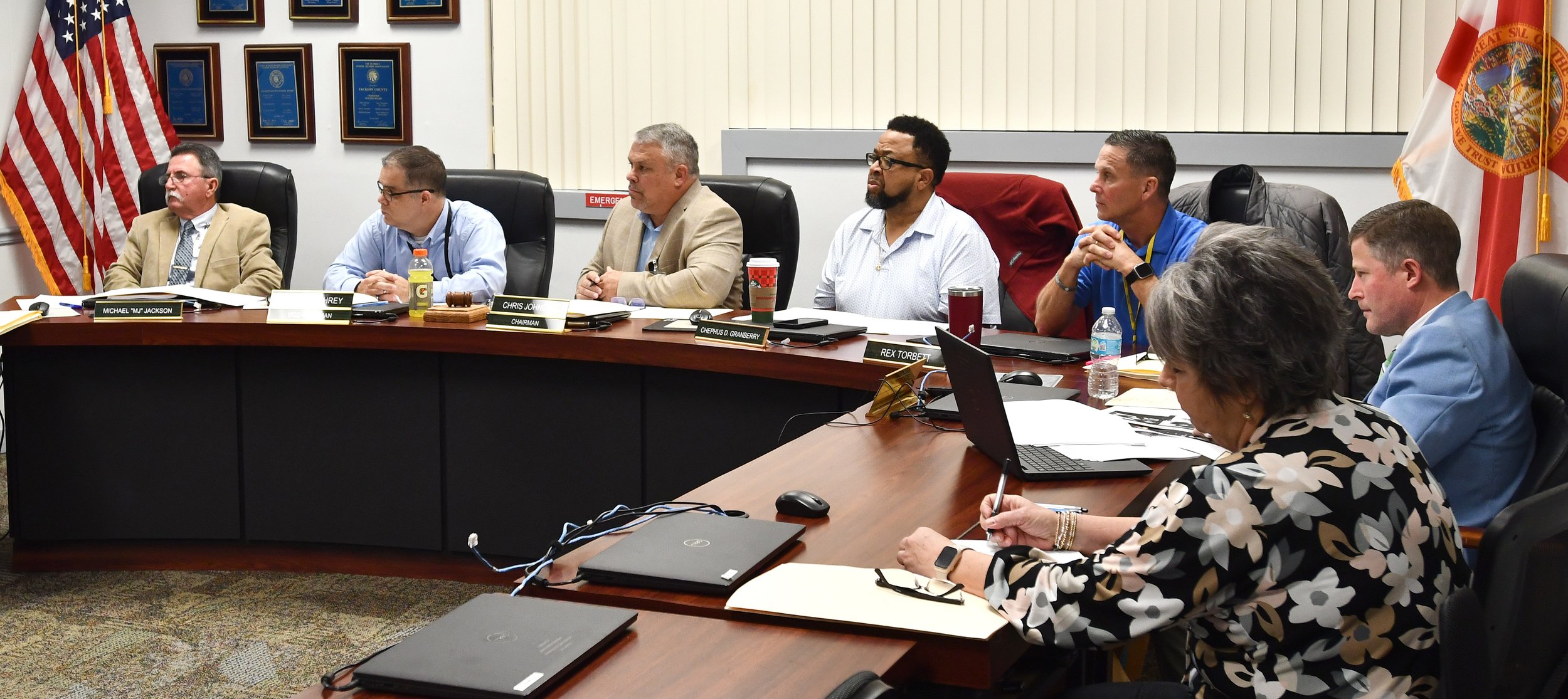
The Jackson County School Board spent significant time working through a complex and emotionally charged discussion surrounding staffing allocations, budget limitations, and the long-term sustainability of the district. At the center of the conversation was a difficult balancing act: how to remain financially responsible while still meeting the academic and developmental needs of students.
Chairman Chris Johnson made it clear early on that there is a widespread misunderstanding among the public about how school funding works. He emphasized that the district does not have the authority to generate unlimited revenue and must operate within a fixed budget determined largely by enrollment and state funding. Because of that, every staffing decision must be carefully weighed. Johnson explained that the board’s approach is to begin with a “bare bones” model and then add positions back only when there is clear justification. He acknowledged that these decisions may not be popular but insisted they are necessary to keep the district financially stable.
Board member Rex Torbett echoed the need for careful decision-making, stressing that he wanted a full understanding of what he was voting on. He raised concerns about how staffing priorities are determined, arguing that core academic subjects such as math, science, and English should come first. Torbett pointed out that approving elective or non-core positions while denying core instructional roles could create the perception that the board is not prioritizing student learning, even if that is not the intent.
Throughout the discussion, board members repeatedly returned to the issue of financial responsibility. Johnson noted that the district may currently be overstaffed by as many as 50 to 75 positions, a situation partly attributed to previous federal funding that is no longer available. Superintendent Hunter Nolen added that while reductions are necessary, cutting too deeply would harm the district’s ability to function effectively. The current proposal reflects a reduction of about 24 instructional positions, which is expected to save roughly $1.4 million.
At the same time, administrators and principals pushed back, emphasizing that staffing decisions directly impact classroom conditions, student outcomes, and teacher retention. They warned that increasing class sizes and removing support positions could lead to diminished instruction and drive teachers away at a time when recruitment and retention are already difficult.
One of the most significant points came from board member Chephus Granberry, who joined the meeting via Zoom. Granberry said the district must confront a deeper issue beyond staffing numbers. He pointed to declining enrollment and argued that the district continues trying to operate the same number of schools and programs despite having fewer students. He stated plainly that the system is stretched too thin and that difficult conversations are being avoided. As he put it, “we are not talking about the real problem, our declining enrollment, but we are failing to decline the number of schools, facilities, and stuff, we are doing more than we can afford to do.” His comments underscored the broader reality that structural changes, including the potential consolidation of schools, may be necessary to ensure long-term sustainability.
Grand Ridge School
Discussion around Grand Ridge was relatively limited, but some concerns were raised about how its staffing levels compared to other schools with similar enrollment. Board member Torbett questioned whether the number of positions aligned appropriately with student numbers, particularly when compared to other configurations in the district. While no immediate decisions were made, the conversation highlighted the board’s effort to scrutinize consistency across schools.
Cottondale High School
Cottondale High School’s staffing plan drew attention primarily because it did not show a loss in instructional positions, unlike many other schools. The administration explained that this was largely due to projected enrollment increases, which justified maintaining current staffing levels. A key component of Cottondale’s request was the continuation of an RTI (Response to Intervention) position funded through federal dollars. District leaders defended these positions, explaining that they play a critical role in handling intervention services, student support, and administrative requirements that would otherwise fall on classroom teachers.
Hope School
Hope School’s request centered on the addition of three Autism Spectrum Disorder (ASD) program classes to better serve students with specialized needs. Administrators explained that the number of students requiring these services is increasing and that the program is based on eligibility criteria rather than parent choice alone. While parents must consent to placement, students must meet specific requirements to qualify. Board members asked clarifying questions about how students are selected, but there was general recognition that these services are necessary for students with higher levels of need.
Sneads High School
At Sneads High School, the focus was again on maintaining existing support structures, including an RTI position that serves multiple functions such as intervention, on-the-job training coordination, and intensive reading support. Questions were raised about staffing classifications, particularly in Career and Technical Education (CTE) roles, but administrators clarified that many of these positions are blended and serve multiple purposes. The discussion reinforced the idea that schools are already stretching staff across multiple responsibilities to meet student needs.
Marianna High School
Marianna High School requested continued support for its RTI position along with additional clerical assistance. Administrators explained that the RTI role is essential not only for academic intervention but also for dropout prevention, attendance monitoring, and student counseling. The school is also adjusting to a reduction in data entry personnel, making clerical support necessary to maintain operations. Board members questioned funding sources, and it was clarified that clerical positions must be funded through the general budget, while instructional support roles may qualify for federal funding.
Malone School
Malone School took a different approach by prioritizing classroom teachers over support positions such as RTI. The principal explained that covering classrooms was the most immediate need, even though the loss of support roles could create additional strain on teachers. Concerns were raised about rising class sizes, particularly in early grades, where numbers are already approaching levels that teachers say are difficult to manage effectively. The principal acknowledged that while the plan meets budget expectations, it may impact student performance and teacher workload.
Graceville School
Graceville generated one of the most detailed and passionate discussions, particularly around kindergarten class size. The school requested a second kindergarten teacher due to projected enrollment of 28 students. Chairman Johnson suggested combining the class under one teacher with a paraprofessional, but educators strongly opposed that idea. They explained that kindergarten students require intensive support, and large class sizes quickly shift the focus from instruction to behavior management. Teachers and administrators emphasized that early learning years are critical and that overcrowded classrooms could have long-term academic consequences. Several participants also warned that such conditions could lead to teacher burnout and resignations.
Cottondale Elementary School
Cottondale Elementary’s projections showed a potential decline in enrollment, but administrators cautioned that those numbers may not reflect actual conditions by the start of the school year. The school has already received a number of new student requests through open enrollment, which could offset or even reverse the projected decline. Board members acknowledged the uncertainty and noted that adjustments may need to be made later as enrollment becomes clearer.
Early Childhood Programs
The district’s early childhood programs were discussed in the context of federal requirements and staffing ratios. Administrators explained that certain classrooms must meet strict ratios, including a one-to-four requirement in some cases. Questions were raised about the long-term impact of investing heavily in early childhood staffing, particularly whether it directly improves later academic performance. While no definitive data was presented, administrators maintained that these programs are essential and largely funded through grants.
Marianna K-8 School
Marianna K-8’s staffing plan included maintaining physical education teachers, instructional support positions, and administrative staffing levels, including a change to make an assistant principal position 12 months instead of 11. The justification centered on the size of the school and the complexity of its operations, including multiple summer programs and ongoing administrative demands. Board members questioned the timing of the change, noting that it differed from a previously approved plan, but Superintendent Nolen acknowledged that the decision was made in response to leadership transitions and the need for stability.
Conclusion
The meeting made clear that the district is at a crossroads. Board members are under pressure to reduce spending and address overstaffing, while educators are warning that further cuts could harm students and drive away teachers. Underlying it all is the reality of declining enrollment, which continues to strain the system. As Granberry emphasized, the district may ultimately need to look beyond staffing adjustments and confront larger structural changes. The decisions made in the coming weeks will likely shape not only next year’s budget but the long-term direction of Jackson County’s schools.
