
Satsuma Growers Prepare For Frigid Temps
By: Shelia Mader
With below-freezing temperatures forecast to linger for several days over the weekend, satsuma growers across Jackson County moved quickly to protect their trees, knowing that a hard freeze can affect not only this season’s fruit but crops for years to come.
Two local farmers, Blake Donaldson of Cherokee Ranch and Herman Laramore of Bar L Ranch, shared how they prepare for extended cold and what is at stake when temperatures dip below freezing.
At Cherokee Ranch, Donaldson said freeze protection centers on irrigation. When temperatures are expected to stay below freezing for several hours, water is sprayed continuously over the trees. As the water freezes, it forms a protective layer of ice that keeps the tree tissue at about 32 degrees.
“The ice acts like a blanket,” Donaldson explained. “It freezes the leaves and limbs, but it keeps the temperature from dropping any lower. Once the freeze is over, we shut the water off and let everything thaw naturally.”
Donaldson said satsumas are technically at risk any time temperatures fall below 32 degrees, but older, established trees can withstand short cold snaps without much trouble. The real concern comes with prolonged freezes or temperatures that dip well below freezing for extended periods.
“A couple of hours at 30 degrees usually isn’t enough for us to turn the water on,” he said. “But if it’s going to stay below freezing for a long time, that’s when we take action.”
Freeze damage can be severe. Donaldson said cold can kill limbs, prevent trees from blooming the following spring, or in extreme cases kill the tree entirely. Without blooms, there is no fruit the next season.
“If something goes wrong and the trees aren’t protected when they should be, worst-case scenario is no blooms and little to no crop next year,” he said.
For homeowners with a single satsuma tree, Donaldson said simple measures can still help. Covering trees with blankets or sheets and securing the fabric around the base can trap heat and reduce damage. Covers should be removed once temperatures rise above freezing.
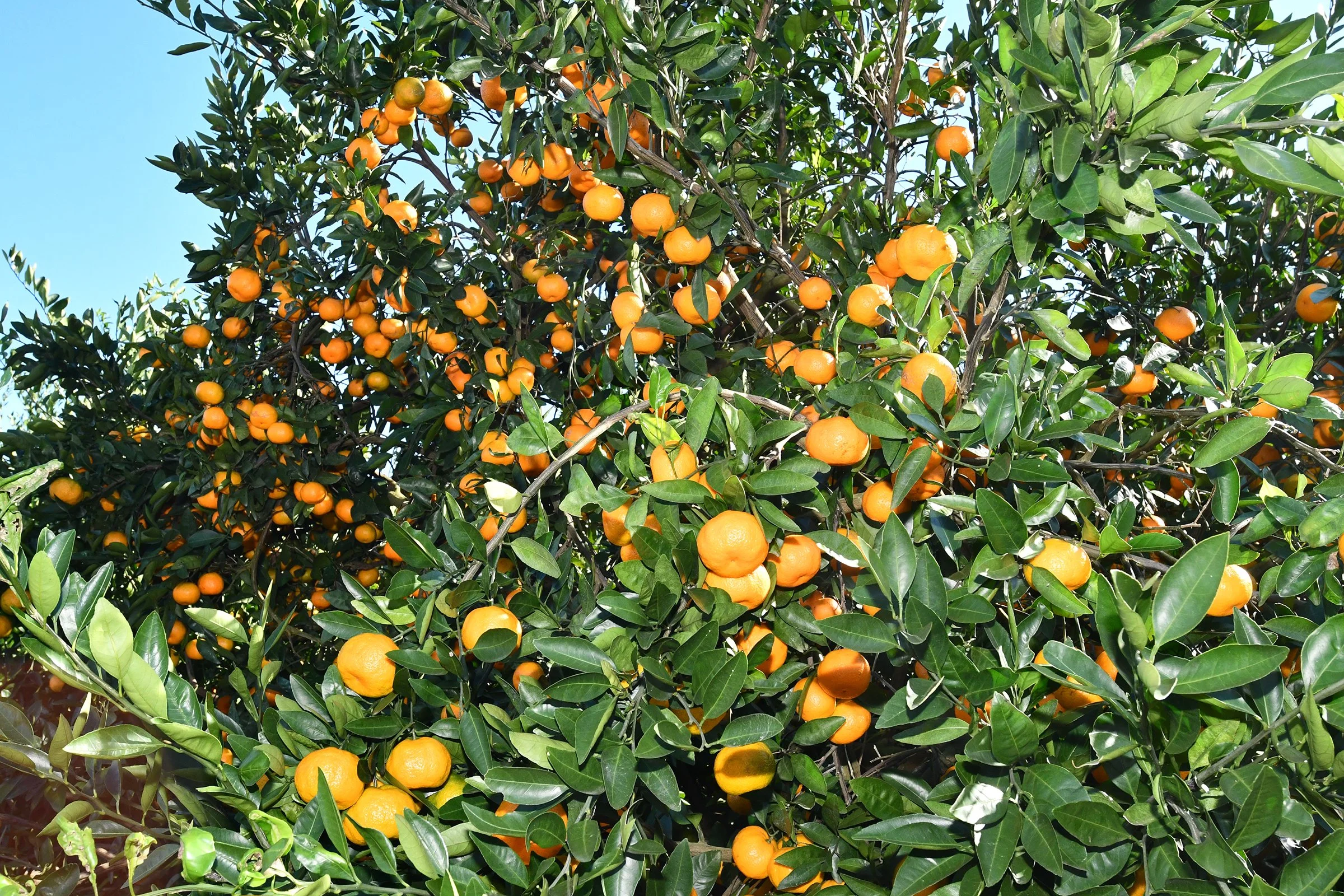
Cherokee Ranch has become a quiet but important part of Jackson County’s agricultural landscape, known for producing sweet, easy-peel satsuma oranges well suited to North Florida’s climate. Under the leadership of founder and owner Mack Glass, a longtime figure in Florida citrus, the ranch has emphasized careful soil management, close monitoring of weather, and precise seasonal timing. Its success reflects a broader return to diversified farming in the county, with satsumas offering a viable crop that requires less winter protection than many citrus varieties.
At Bar L Ranch near Marianna, Herman Laramore echoed many of the same concerns, while also discussing additional methods sometimes used on smaller trees.
“If you’ve got one tree or just a few, old-fashioned Christmas lights can help,” Laramore said. “The kind that actually give off heat. If you can string them through the tree, that warmth can make a difference.”
He added that heat lamps aimed at the lower trunk can also help protect young trees, though they must be securely placed. Like Cherokee Ranch, Bar L Ranch relies on freeze irrigation for its commercial grove, using a fine mist rather than a heavy stream of water.
“It has to be a mist,” Laramore said. “You can’t just pour water on it. We’re pumping several thousand gallons an hour to protect our trees.”
Laramore noted that while freeze protection can save trees, it does not guarantee a future crop. This season’s production was already reduced due to a spring frost that damaged blooms earlier in the year.
“We didn’t make anything this year,” he said. “That spring frost hurt us more than anything. What freeze protection does now is keep the tree alive. The next crop depends on the bloom in April. If you protect the face of the tree and get a good bloom, you can still make a crop.”
Bar L Ranch is a long-running family operation dating back to the early 1900s and is best known as a large commercial cattle ranch. In the 1960s, Herman Laramore and his brother Gordon expanded the operation significantly, at times managing around 1,000 head of cattle. The ranch later added citrus production with the planting of Bar L Citrus around 2003. Today, the grove includes about 750 satsuma and Lee tangerine trees, hand-harvested each fall and shipped to customers during the November and December season.
Once a region known for thousands of acres of satsuma groves and large festivals celebrating the fruit, Jackson County’s citrus footprint is smaller today. For growers like Donaldson and Laramore, careful freeze preparation remains essential to keeping that tradition alive, one cold night at a time.
