
Marianna Police Department Receives $30,000
By: Shelia Mader
Last year, the Florida Legislature set aside $250 million in the state budget to reimburse local law enforcement agencies for costs tied to immigration enforcement activities, including bonuses for officers participating in federal immigration partnerships. That budget was signed by Governor Ron DeSantis as part of the state’s broader response to what Republican leaders have called an immigration “crisis,” and to support local agencies that help enforce federal immigration laws.
These reimbursements are handled through the State Board of Immigration Enforcement, a panel that includes CFO Blaise Ingoglia, the governor, the attorney general and the agriculture commissioner. Agencies across the state can apply to this board to have costs associated with federal immigration enforcement reimbursed.
According to state statute, eligible reimbursements can include things like leasing detention bed space for Immigration and Customs Enforcement (ICE), travel and lodging tied to immigration task force operations, training programs connected to federal immigration work, equipment, and in some cases, bonuses for officers who are trained as immigration officers under federal agreements.
Awards are granted on a first-come, first-served basis once applications are complete and approved by the board, and agencies must provide detailed tracking of how funds are used to remain eligible.
A key part of this funding effort is Florida’s connection to the federal 287(g) program. Under this program, state and local officers can be trained and credentialed to work alongside U.S. Immigration and Customs Enforcement (ICE). Participating agencies essentially extend ICE’s reach by identifying, detaining or processing non-citizens who are suspected of immigration violations or criminal offenses, and sharing that information with federal authorities.
In recent reporting, federal officials noted Florida has far more 287(g) partnerships than most states, reflecting the emphasis state leaders are placing on these agreements.
For departments that sign up, the state funding is meant to offset the extra cost of those duties, like overtime, training or equipment that agencies rack up when working on immigration enforcement in coordination with ICE.
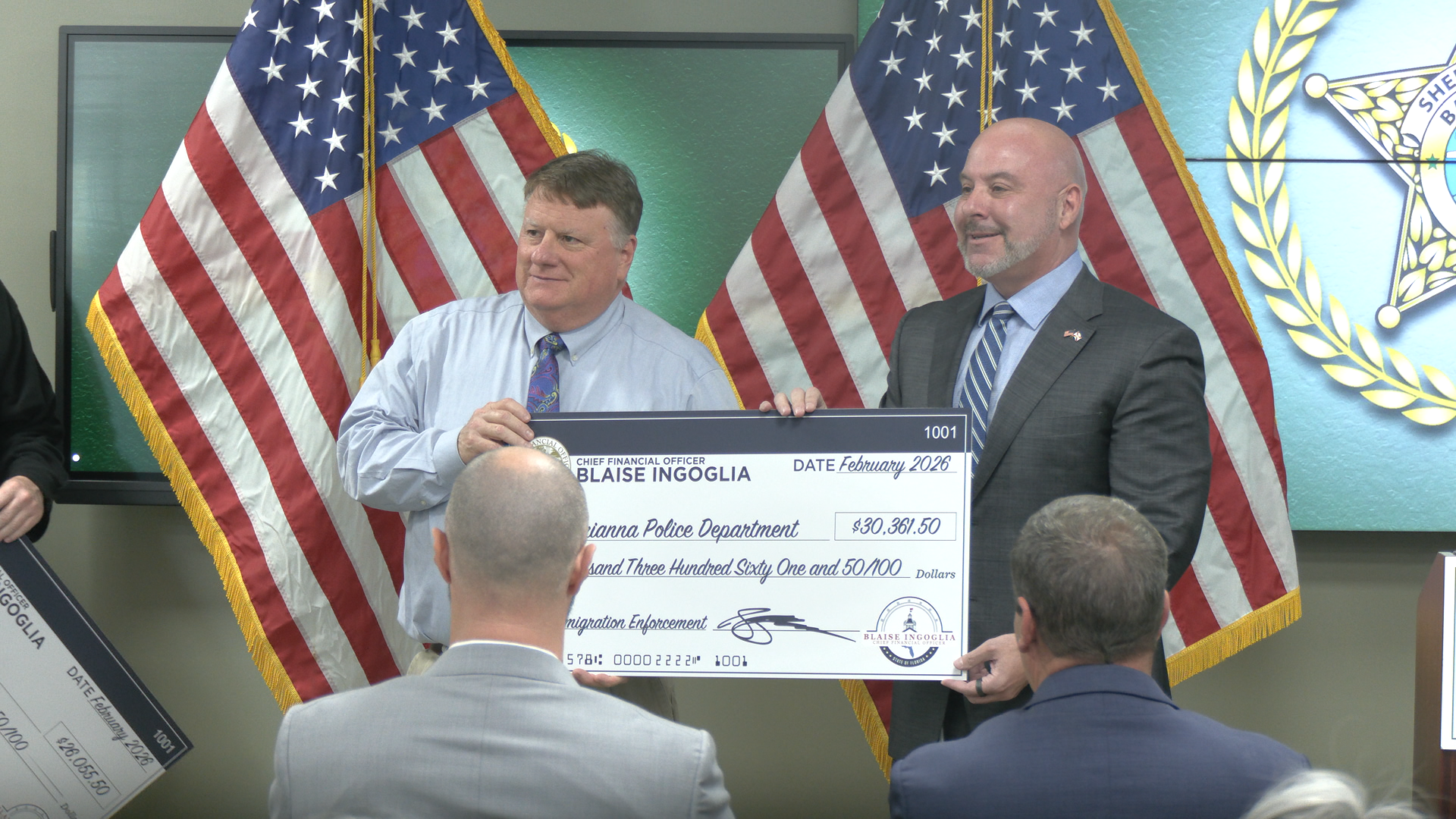
At Monday’s event in Panama City, CFO Blaise Ingoglia presented reimbursement checks to agencies across the Panhandle for their participation in these immigration enforcement efforts. Among them:
The Marianna Police Department received $30,000 to help cover expenses tied to immigration enforcement and 287(g)-related activities.
Compared to some larger counties, Bay County received about $686,000 and Walton County got nearly $649,000, Marianna’s award is smaller in dollar terms. But it still signals the city’s active role in the statewide enforcement strategy and ensures that local costs tied to federal immigration collaboration aren’t borne entirely by the city’s budget.
Chief Hayes Baggett can frame this as a win for Marianna taxpayers, the city is being reimbursed for real costs that come with participating in national immigration enforcement efforts, and that money can be put back into local priorities like patrols, equipment or training.
With additional rounds of reimbursement still expected as agencies file applications and the State Board of Immigration Enforcement evaluates them, departments like Marianna’s could see further funds later in the fiscal year.
